
The high-field successor to SUNIST
SUNIST-2 is the second spherical tokamak of the SUNIST laboratory. It was designed to extend the laboratory's research to a 1 T toroidal field and a nominal plasma current of 500 kA, and it has been in operation since its first plasma in March 2023.
Three goals shaped the design: understanding energy confinement at high magnetic field — where spherical-tokamak confinement improves almost linearly with toroidal field — studying ion heating by magnetic reconnection, and exploring repetitive pulsed operation as an alternative to conventional steady-state current drive.
The device was designed and led by the Department of Engineering Physics at Tsinghua University. Shaanxi Startorus Fusion Technology Co., Ltd. participated deeply in its construction and operation through a technology-transfer and collaboration agreement; the Institute of Plasma Physics (ASIPP, Hefei) contributed to the engineering design, machining and assembly, and the Southwestern Institute of Physics (SWIP, Chengdu) to the physics design.
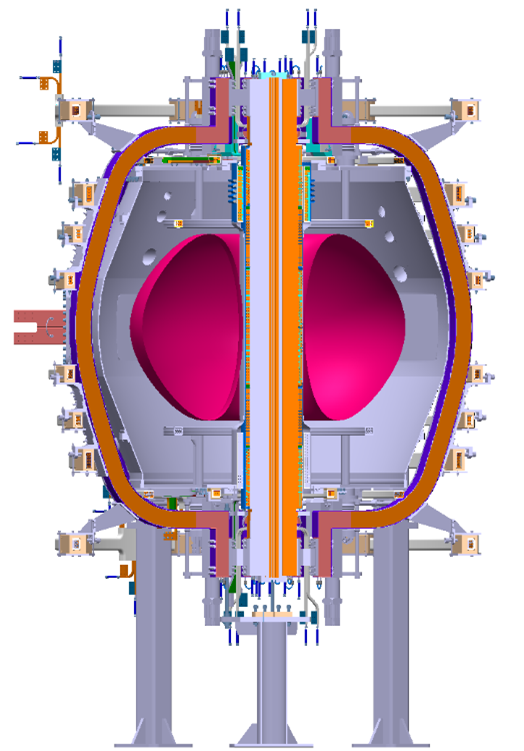
SUNIST-2 in numbers
-
2023
First plasma — March 2023
-
1.0 T
On-axis toroidal field
-
500 kA
Plasma current — design value reached in 2025
-
≤ 2.0
Maximum elongation (κ)
Design parameters and performance
SUNIST-2 is designed to access the high-field regime of the spherical tokamak — roughly seven times the design toroidal field and ten times the design plasma current of SUNIST.
| Parameter | Value |
|---|---|
| Major radius, R0 | 0.53 m |
| Minor radius, a | 0.33 m |
| Aspect ratio, A | ≈ 1.6 |
| On-axis toroidal field, BT0 | 1.0 T |
| Nominal plasma current, IP | 500 kA |
| Plasma current achieved | 500 kA — design value reached in 2025 |
| Maximum elongation, κ | 2.0 |
| Triangularity, δ | −0.6 to +0.6 |
| Central-solenoid flux | 0.6 Wb (six independently powered sections) |
| Toroidal-field coil current | 2.64 MA total |
| First plasma | March 2023 |
Three questions for SUNIST-2
Confinement at high field
Spherical-tokamak confinement is observed to scale almost linearly with toroidal field. SUNIST-2 was built to test this favourable scaling at 1 T, beyond the field range of most operating STs.
Heating by magnetic reconnection
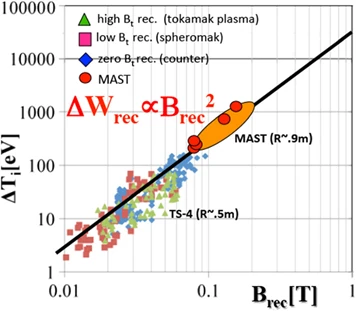
Reconnection-driven heating scales with the square of the reconnecting field. Movable internal coils and a sectioned central solenoid allow the merging process — and the heating — to be optimised.
Repetitive pulsed operation
For compact STs, steady-state current drive is difficult. SUNIST-2 explores a multi-stroke pulsed scenario, analogous to a pulsed combustion engine, to circumvent this constraint.
From design to first plasma
SUNIST-2 was launched in 2019 with funding from the National Natural Science Foundation of China's Major Research Instrumentation programme. Physical design was completed in 2020 and engineering design in 2021; the machine was then assembled at its site in Xi'an during 2022. Commissioning began in March 2023, and the first plasma was obtained the next day.
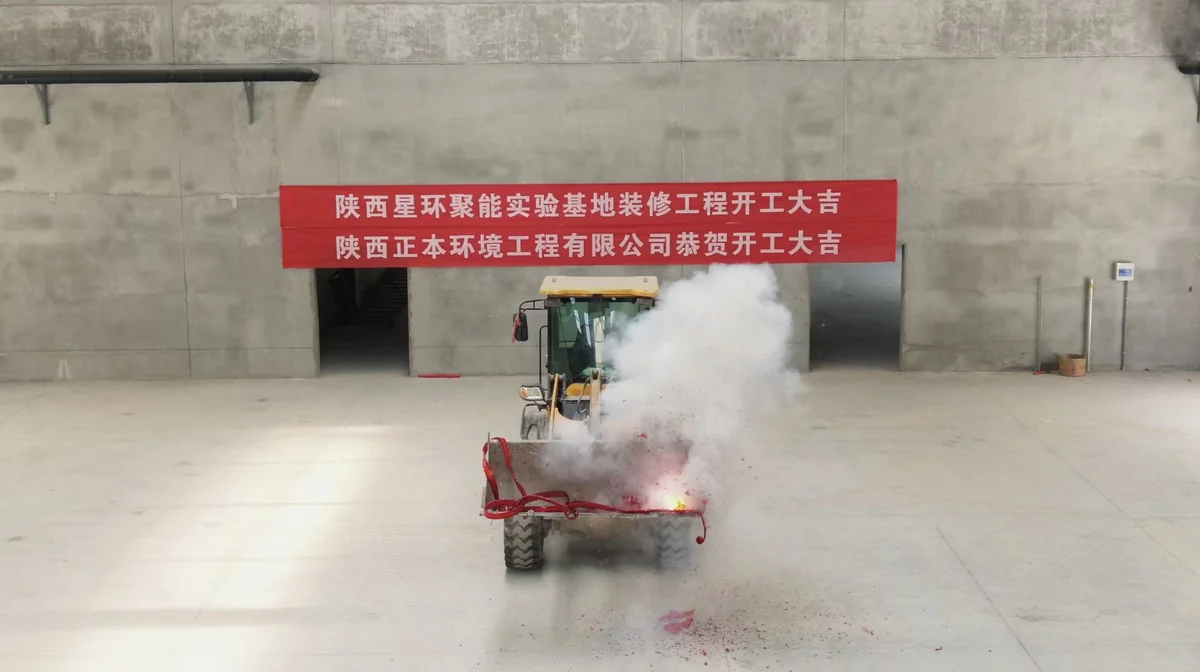
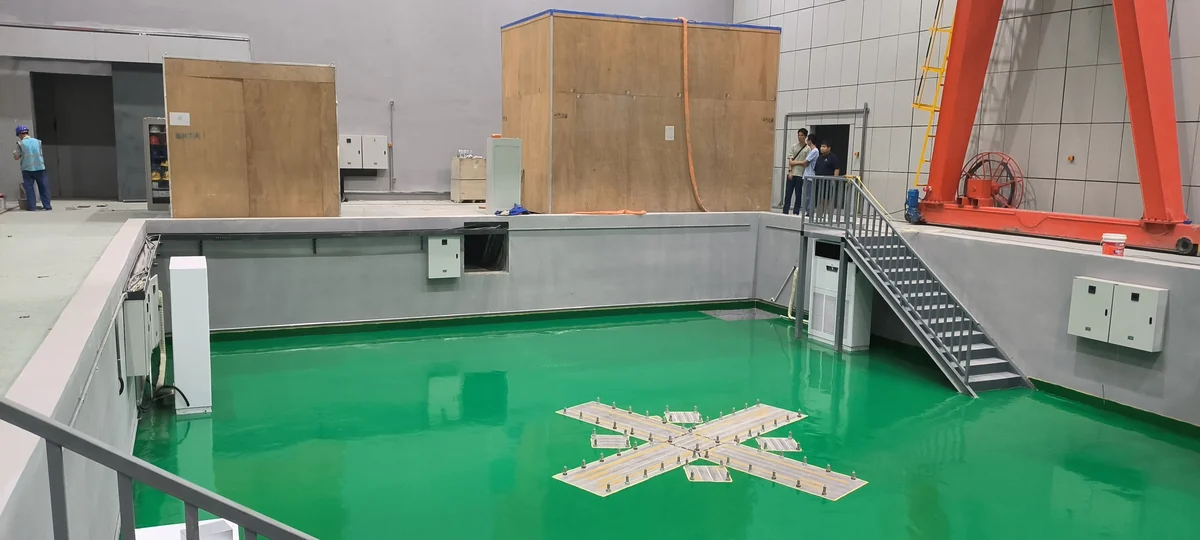
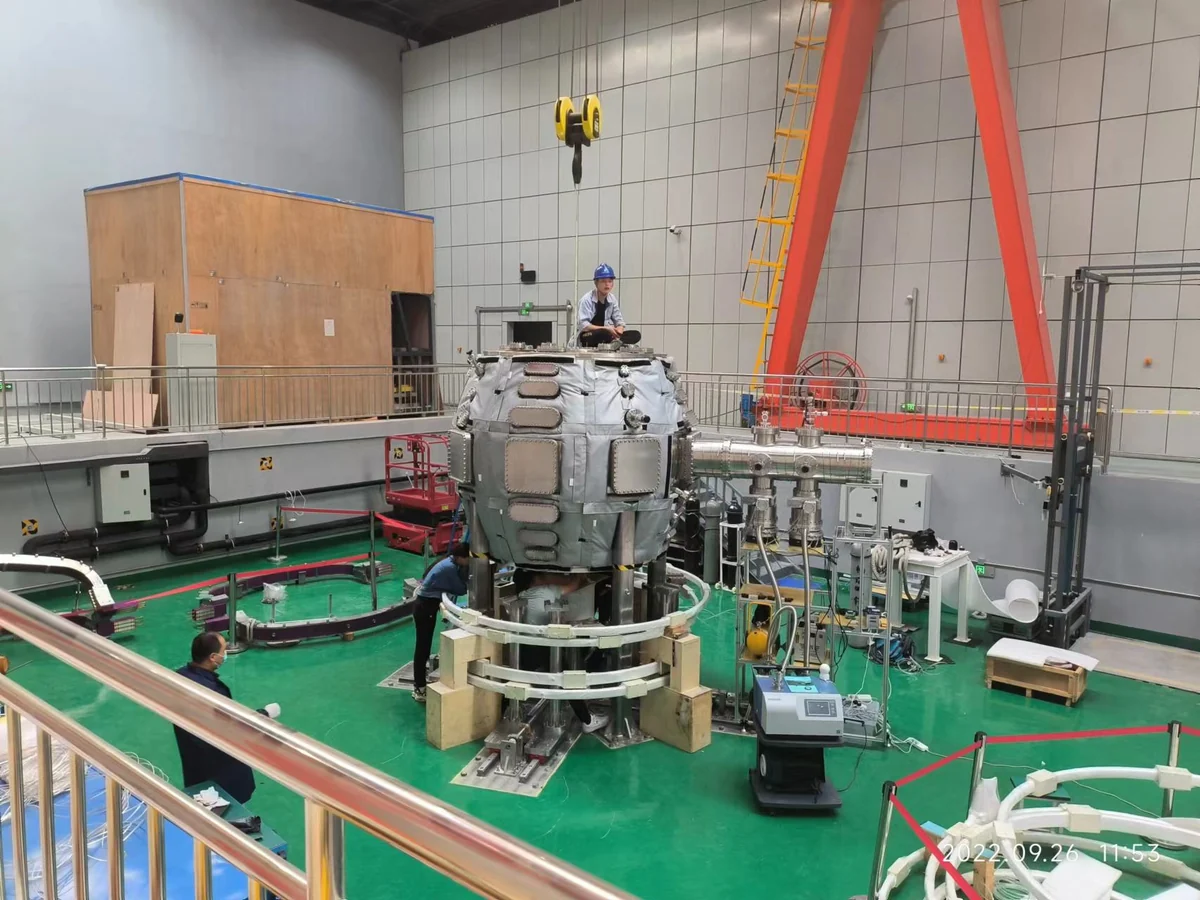
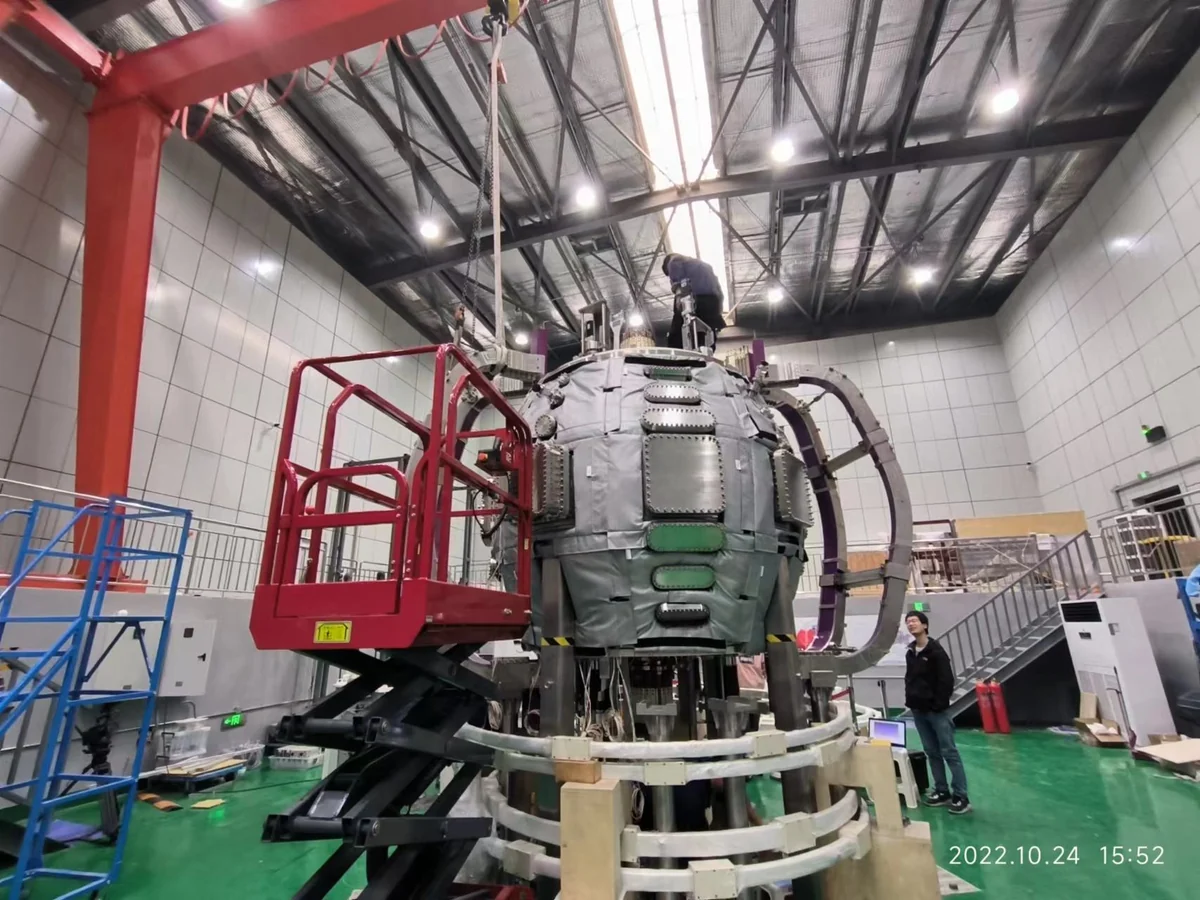
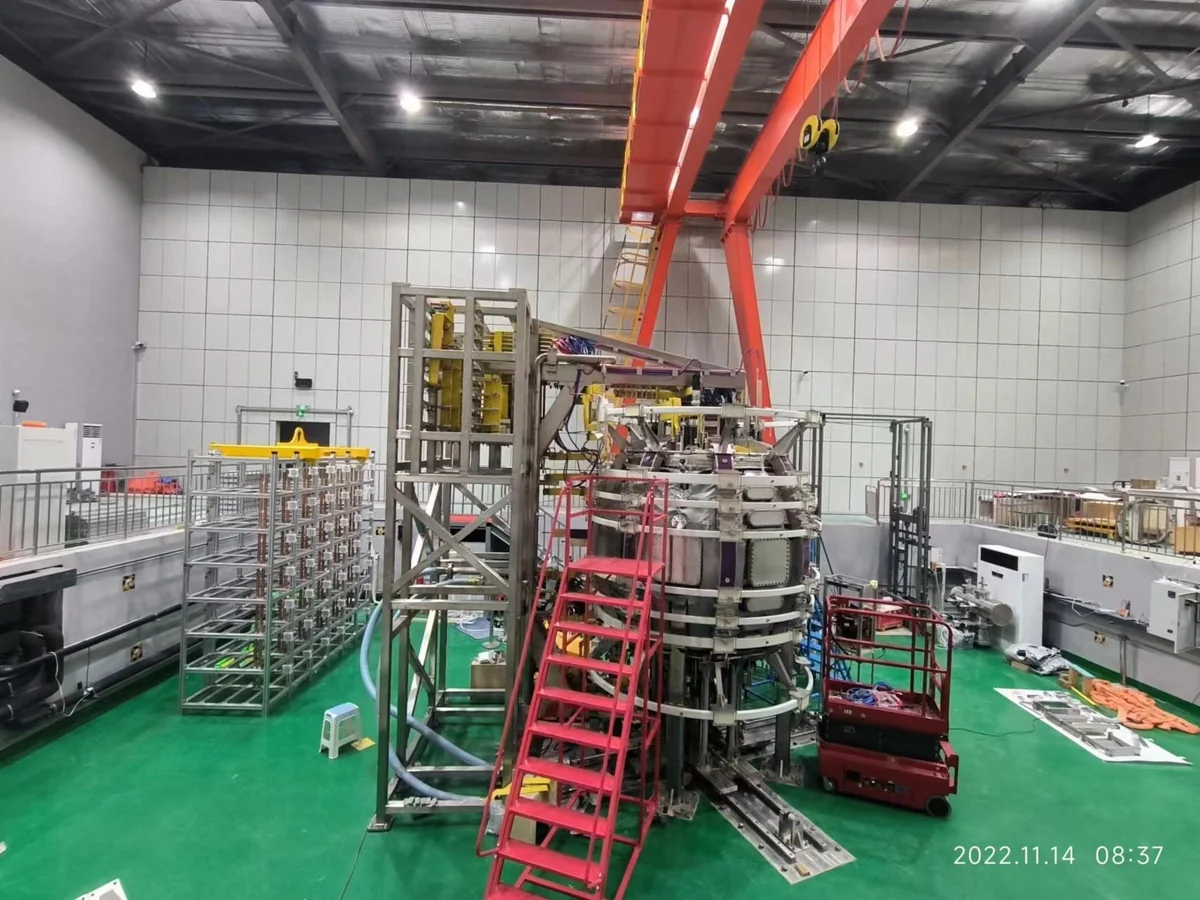
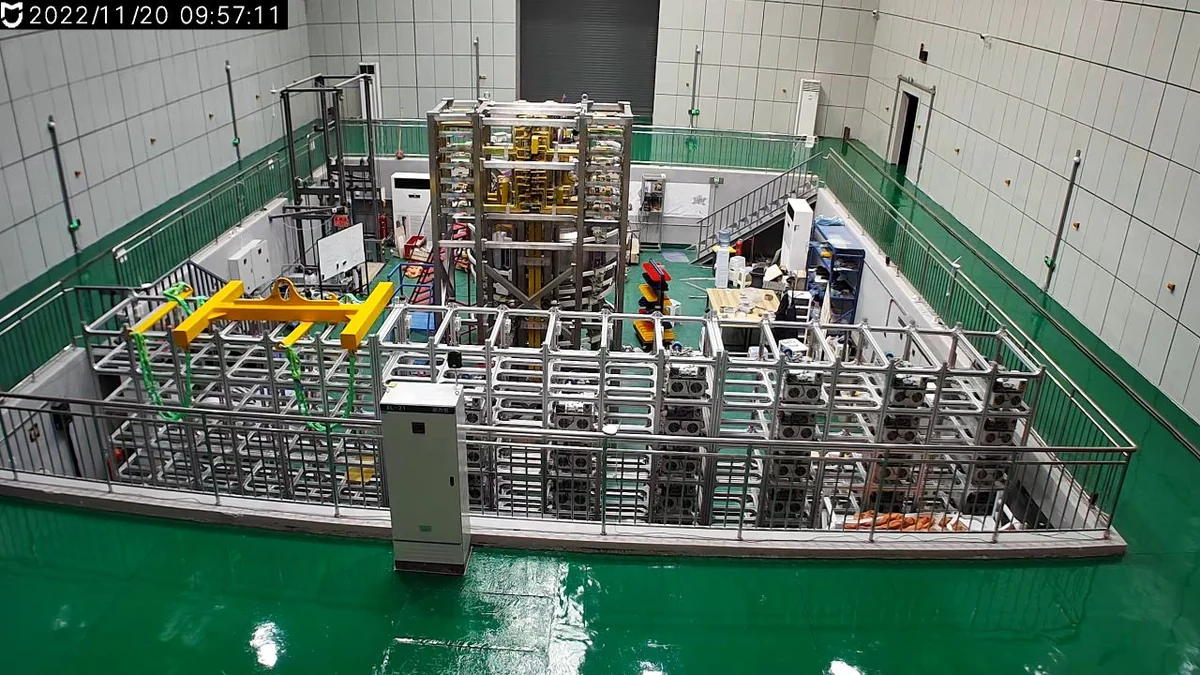
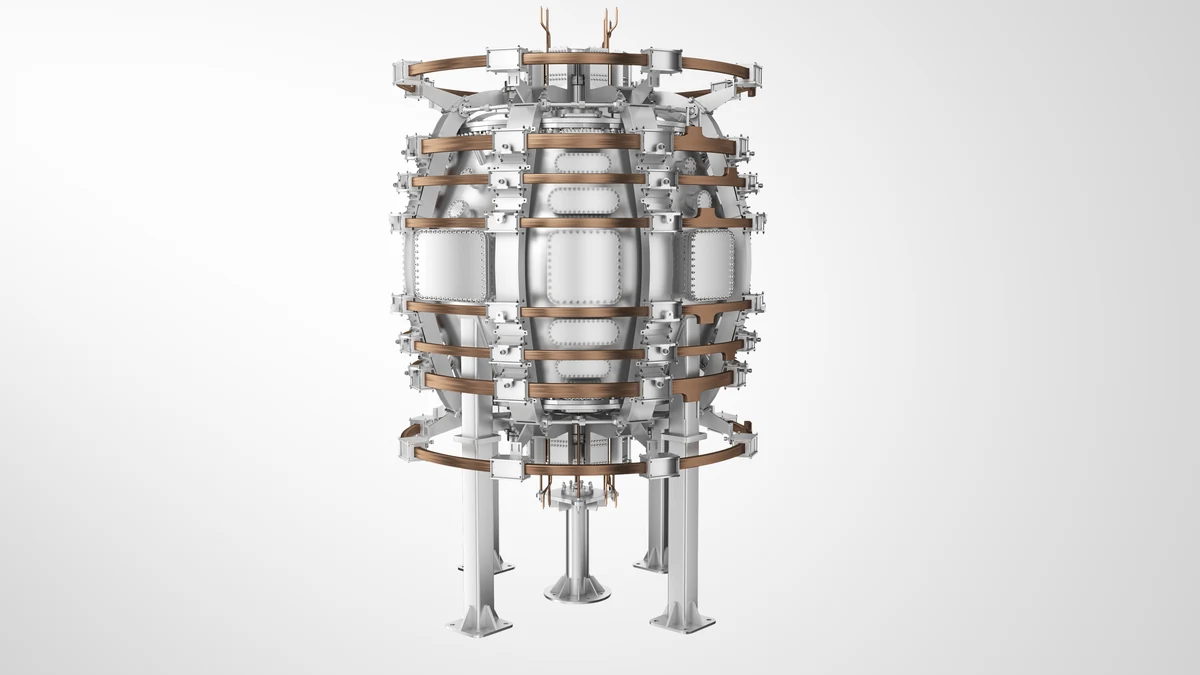
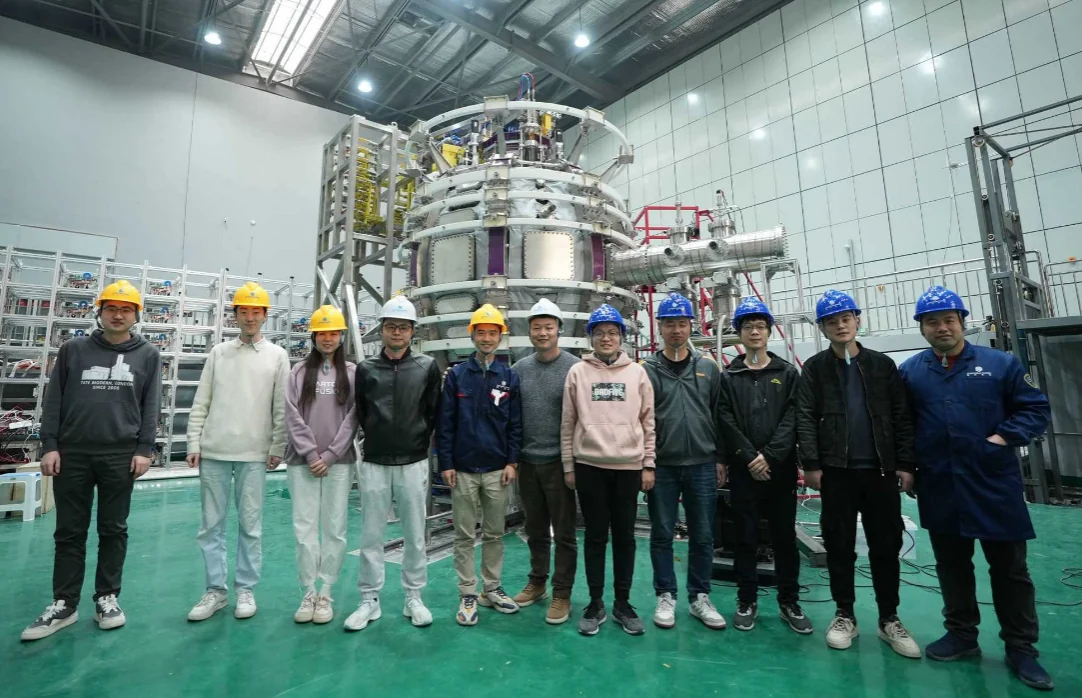
Photographs: SUNIST-2 team, from the project presentation at the 3rd Chinese Fusion Energy Conference (CFEC 2023).
What the device has demonstrated
After first plasma in 2023, campaigns on SUNIST-2 have covered start-up, plasma control, shaping, heating and wall conditioning.
Non-solenoidal start-up
Merging-compression start-up with the movable internal coils formed two plasma rings that merged into a single torus. Dual washer plasma guns were also used, producing doublet plasmas for merging; gun plasmas have Te ≈ 20 eV and ne ≈ 4×10²⁰ m−3.
Plasma control and shaping
A real-time plasma control system shapes diverted plasmas with triangularity δ ≈ +0.6 (R0 = 0.61 m, a = 0.38 m, κ = 1.51) and negative-triangularity plasmas with δ ≈ −0.65 (R0 = 0.57 m, a = 0.33 m, κ = 1.42). Doublets and highly elongated configurations are also accessible.
Dual-pulse operation
Dual-pulse operation has been achieved by programming the power supplies, as a first step towards the repetitive pulsed scenario.
Magnetic-reconnection heating
Ion heating during merging was studied experimentally and found to scale with the square of the plasma current before reconnection — consistent with the reconnection-heating scaling seen on other STs.
Lithium wall conditioning
Lithium coating reduced carbon, oxygen and nitrogen line emission by more than an order of magnitude. In merging start-up, the plasma current increased by about 30% for the same coil volt-seconds, and the reconnection heating increased accordingly.
Impurity and vacuum control
The vacuum vessel is conditioned by hydrogen/helium glow discharge and baking up to 120 °C. Graphite limiters protect the low-field side and the central column; pumping is provided by two turbomolecular pumps and a cryopump (about 14 m³/s for H2).
First campaigns and upgrades (2023)
The first experimental campaign began immediately after commissioning. A discharge-prediction code that includes the power-supply circuits was used to design the first shots, and the first plasma was obtained on the second day of joint commissioning. By the end of 2023 the machine had passed through two upgrade campaigns.
First upgrade: higher toroidal field
The toroidal-field power supply was brought to its rated capacity, raising the on-axis field to about 0.72 T — among the highest achieved on spherical tokamaks at the time. The merging-compression and poloidal-field supplies were also commissioned, and precise gas injection was implemented.
Second campaign: merging start-up
In October–November 2023 a four-step merging process was studied: two plasma rings are formed, compressed and merged into a single torus. The sequence below was recorded during this campaign.
Second upgrade: first wall and diagnostics
Graphite limiters were installed on the central column and the low-field side; electrostatic probe arrays, fibre-optic current sensors, diamagnetic diagnostics, AXUV arrays and a reflectometer were added. A plasma gun, ion Doppler spectroscopy, Thomson scattering and lithium coating extended the start-up and wall-conditioning capabilities.
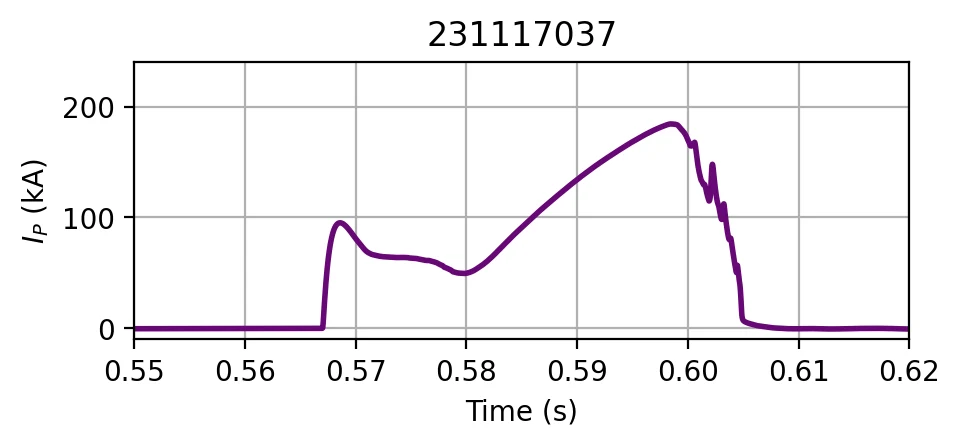
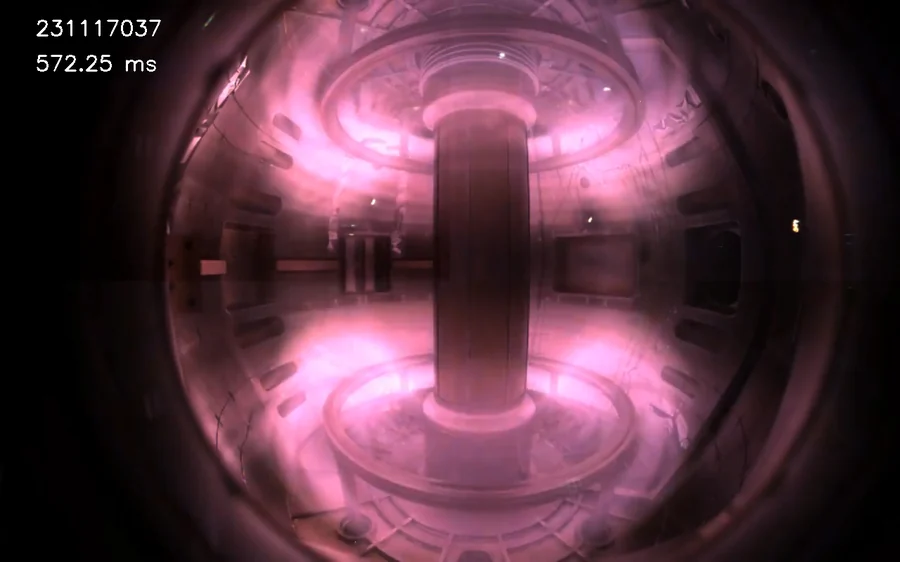
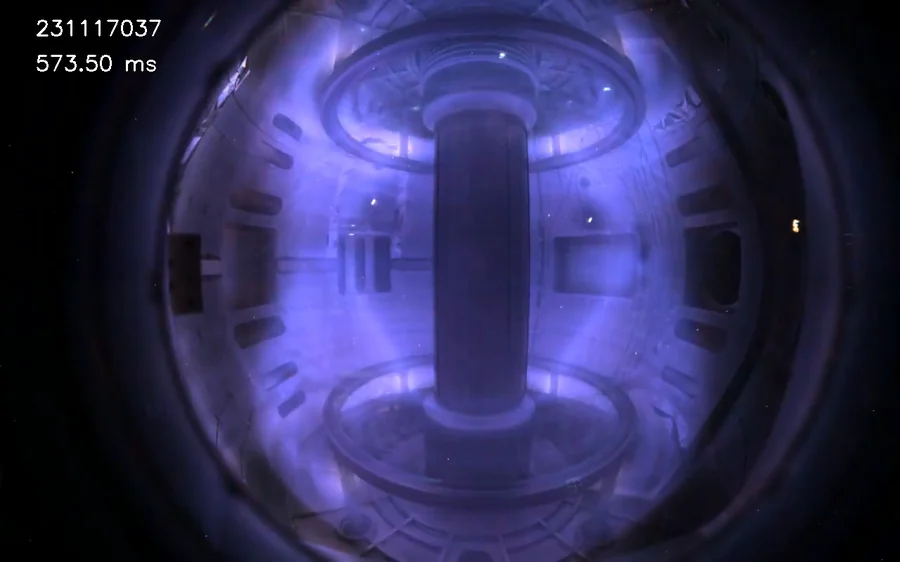
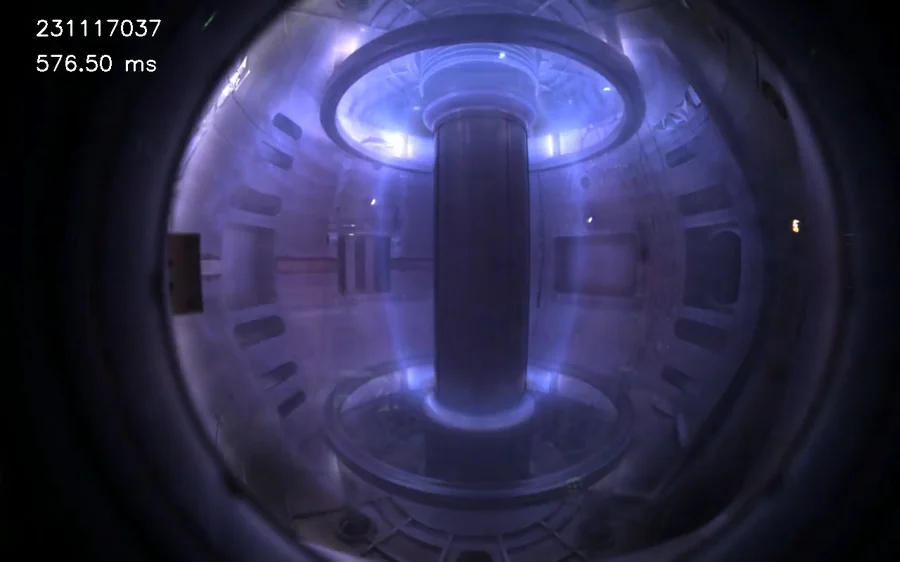
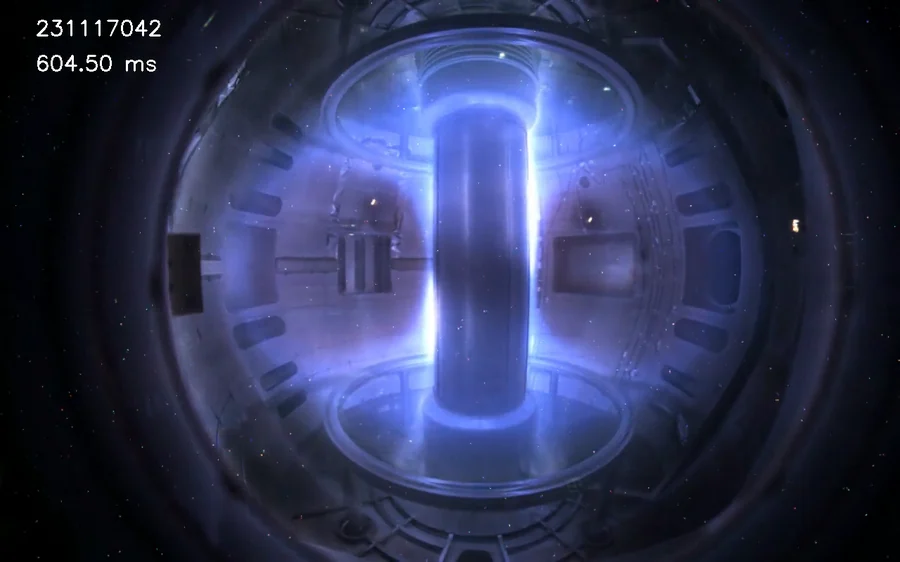
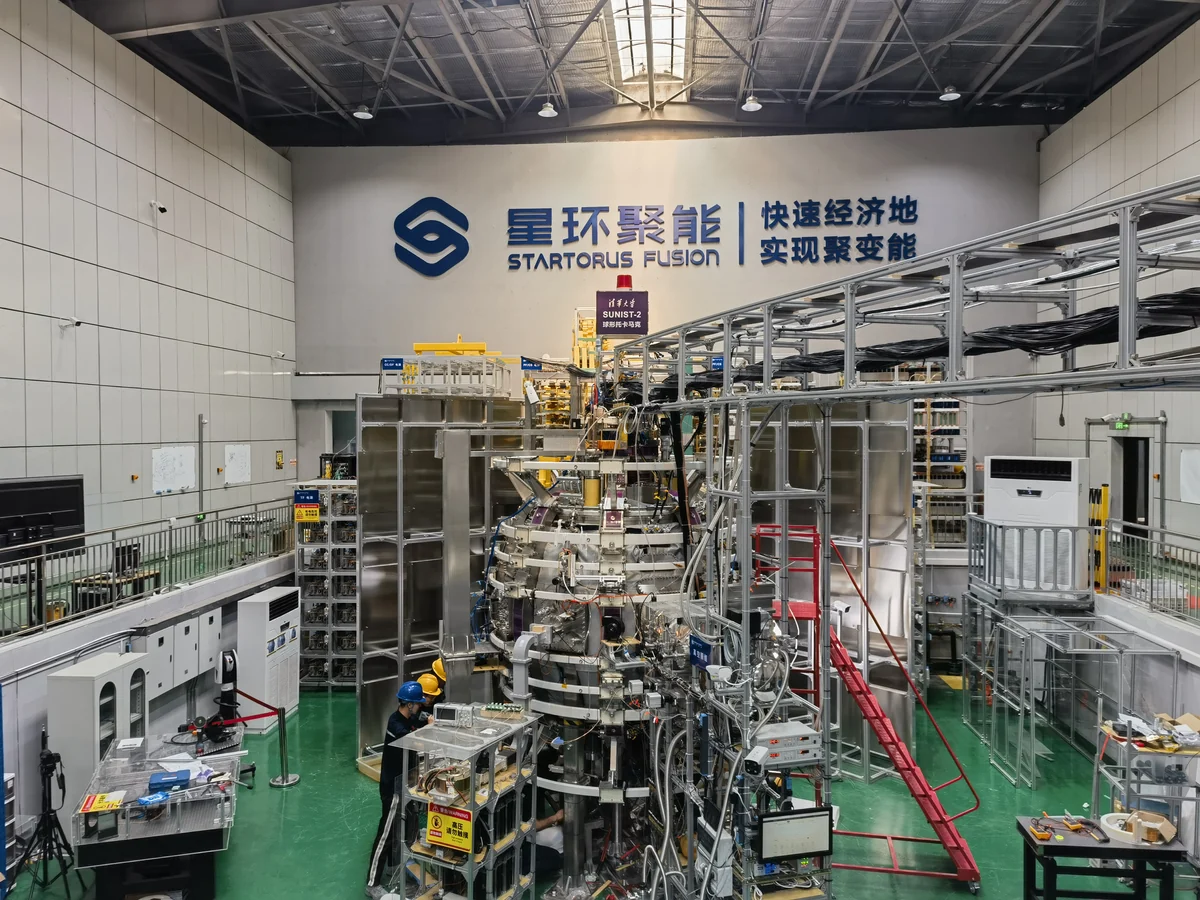
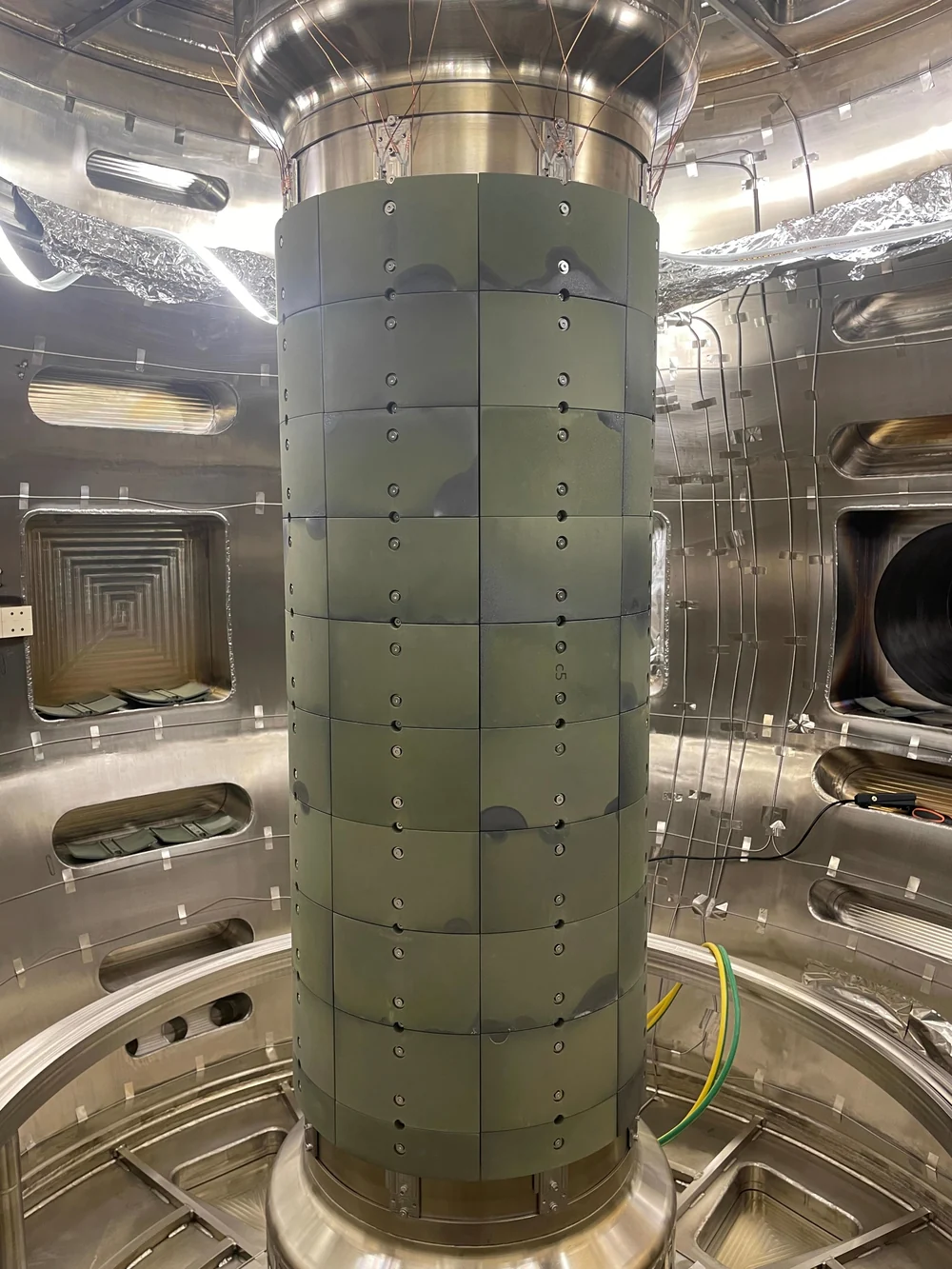
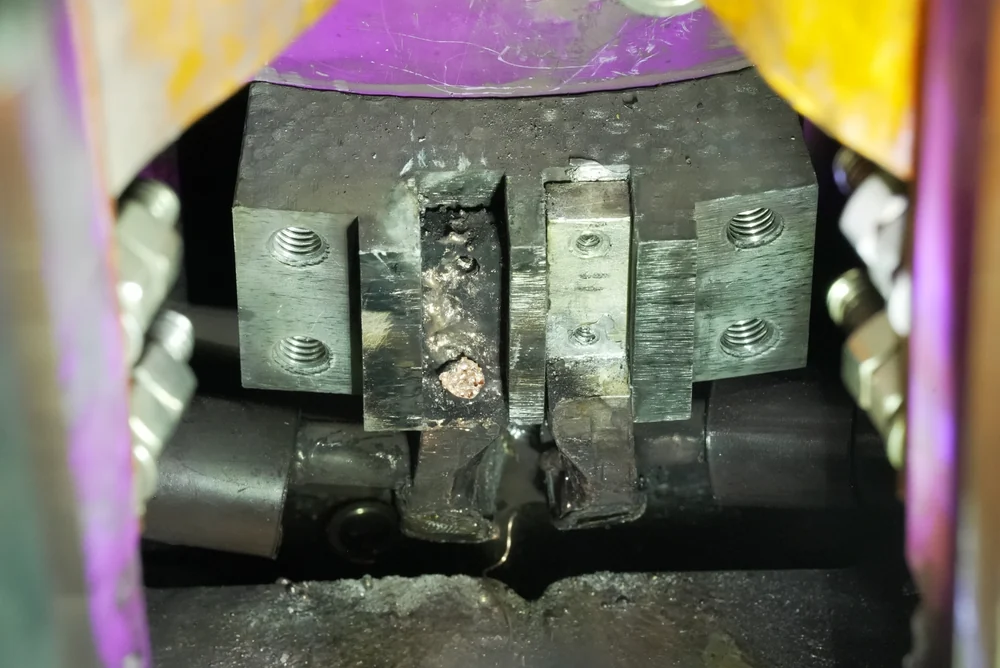
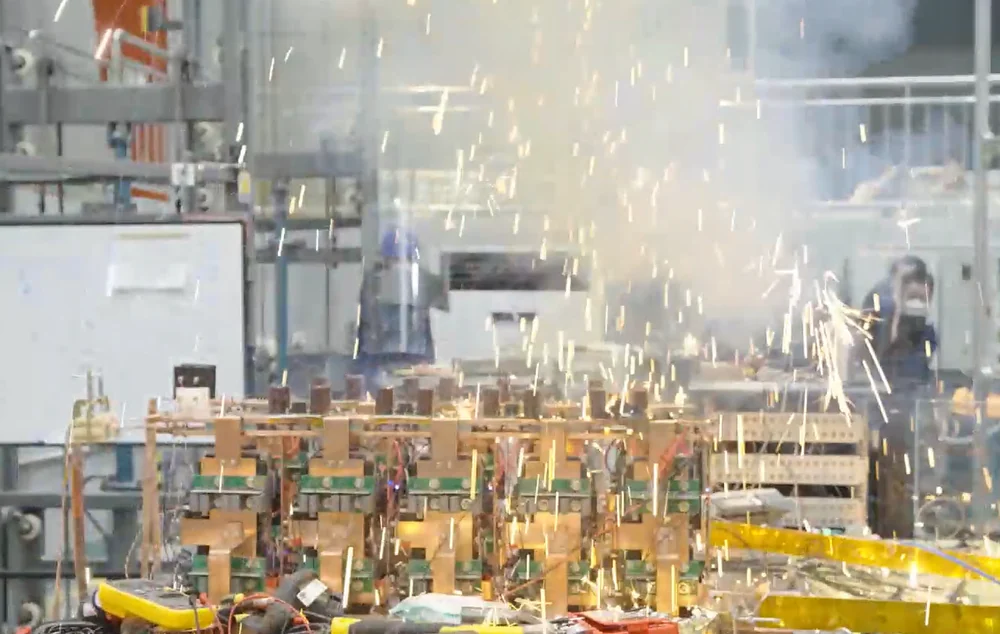
Commissioning was not without setbacks: a damaged central-solenoid joint and a switchgear fault were among the issues diagnosed and repaired in the course of bringing the machine into operation.
Machine design
Vacuum vessel
The vessel has three main sections: an outer cylindrical shell welded to the bottom endplate, a central cylinder, and a removable top endplate. The 1 mm Inconel 625 central cylinder raises the toroidal resistance and reduces eddy currents; the other components are 316L stainless steel, with a 7 mm outer shell and 5 mm reinforced endplates.
Toroidal field and central solenoid
The TF system uses a segmented design: a 24-wedge central column surrounded by eight C-shaped limbs of three turns each, carrying 2.64 MA in total. The central solenoid is wound directly onto the TF central conductor and divided into six independently powered sections providing 0.6 Wb of flux.
Poloidal field and internal coils
Five pairs of poloidal-field coils and a divertor coil pair form the equilibrium and shaping fields, with currents up to 20 kA. Inside the vessel, a pair of merging-compression coils on movable supports provides up to 200 mm of vertical travel; the coils can also be retracted to allow highly elongated plasmas.
Power supplies
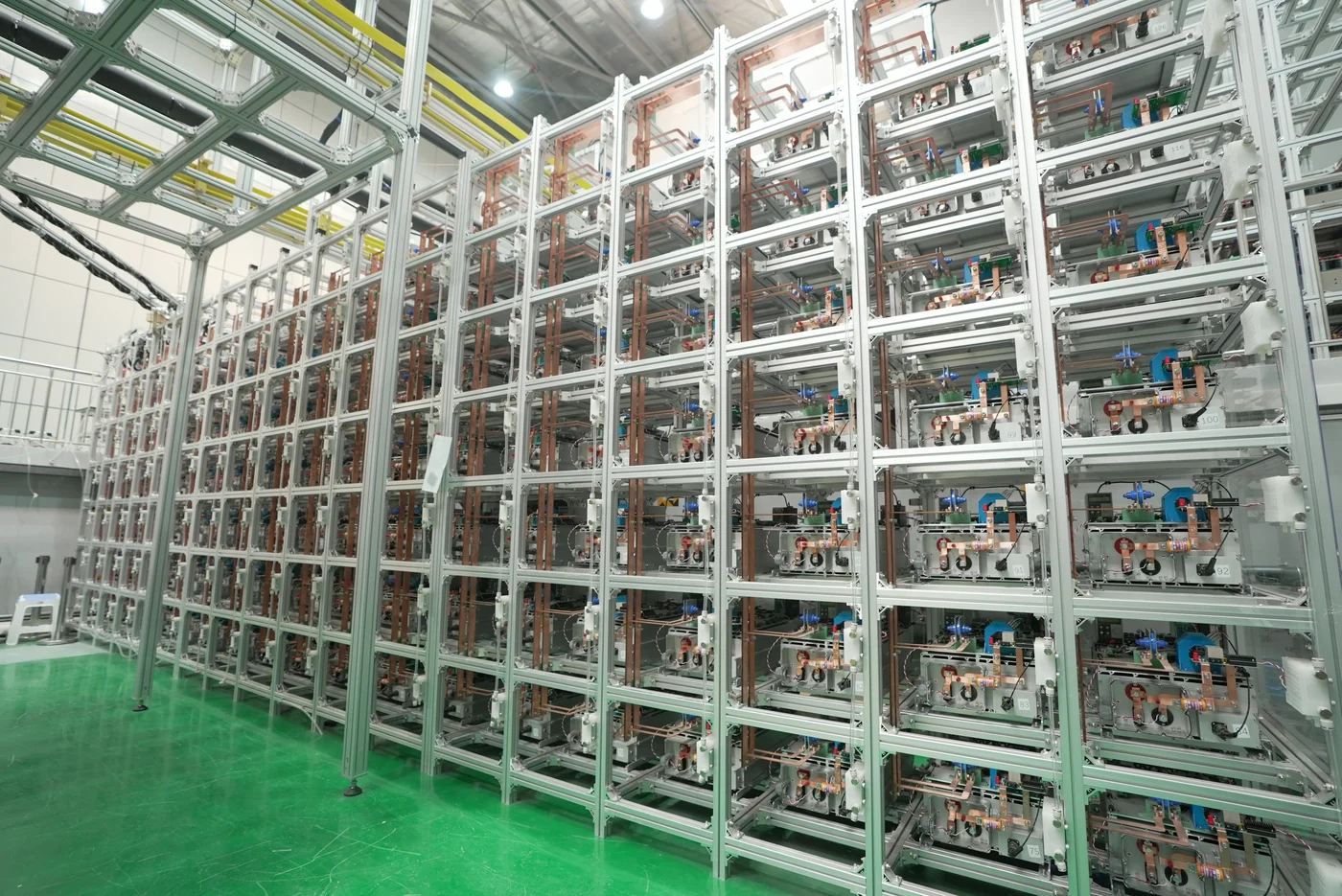
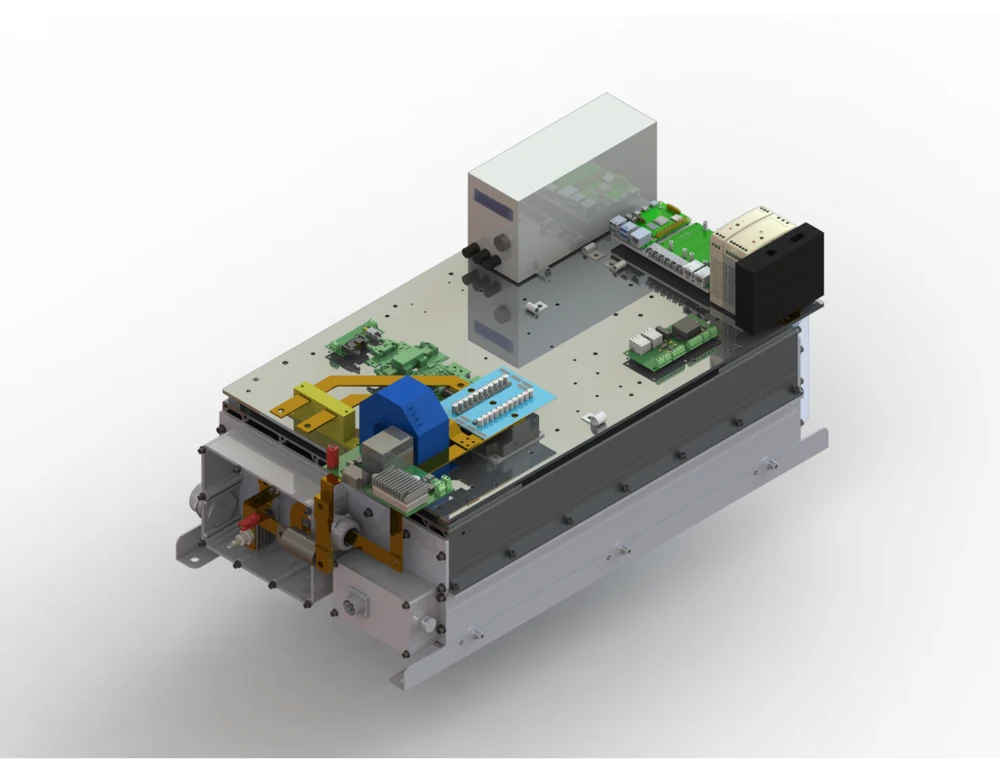
Modular energy-storage magnet power supplies feed the coils, with a single-channel output of up to 110 kA and a total installed power of about 100 MW; the supplies are programmable for multi-pulse scenarios.
Plasma control system
The real-time PCS reads magnetic probes and flux loops through a high-speed acquisition system and drives nine power supplies over EtherCAT at 5 kHz. The control server runs a real-time Linux kernel (Xenomai 4); linear, model-predictive and MIMO controllers have been implemented, with genetic-algorithm optimisation of coil waveforms.
Equilibrium and modelling tools
A free-boundary equilibrium code supports discharge design, equilibrium reconstruction, MHD stability analysis and control validation. A burn-through simulation code developed for SUNIST-2 has been validated against SUNIST-2 and EAST data, and physics-informed neural networks are being developed for real-time equilibrium reconstruction.
Power supplies, control and instrumentation in detail
The magnet power supplies are modular switching supplies with capacitive energy storage. Their parameters, as reported in 2023, are summarised below.
| System | Specification |
|---|---|
| Toroidal field (TF) | Supercapacitor banks, 126 kA / 129 V, 126 modules |
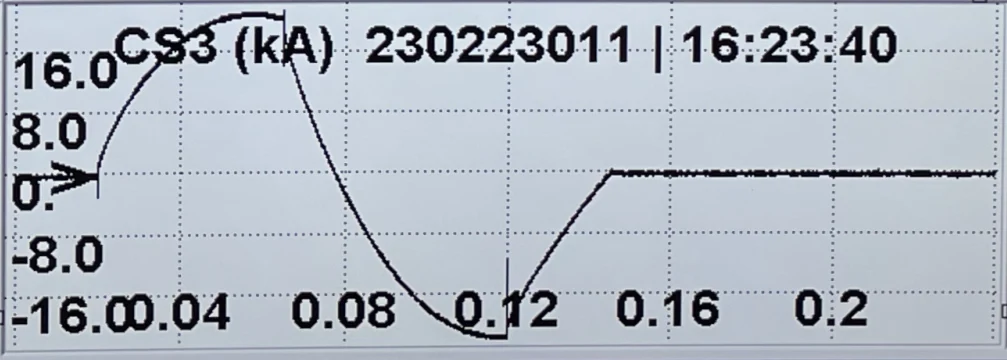
| Central solenoid (CS) | Electrolytic capacitors with IGBT switches, ±22 kA / 450 V, three groups |
| Poloidal field (PF) | 10 kA, seven-level switching, 5 kHz, six groups |
| Merging-compression (MC) | 10 kA / 10 kV, one group |
| Compensation coils | Two groups |
| Peak transient power | Above 70 MW |
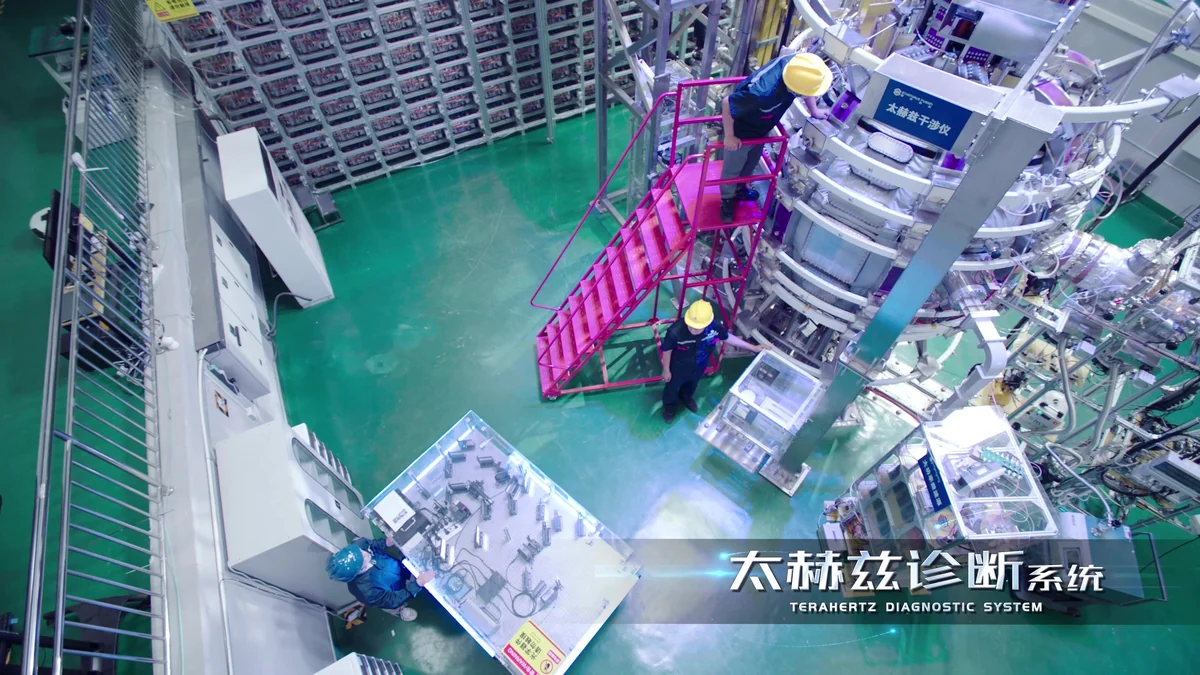
The initial diagnostic set comprised about 200 magnetic channels, filterscopes observing seven spectral lines along six chords, five 100 GHz and one 300 GHz interferometer channels, two high-speed cameras, ion Doppler spectroscopy and a Thomson scattering system provided by SWIP. More than 60 joint-resistance sensors, 20 noise/vibration sensors and 12 temperature sensors monitored the machine during operation.
Measuring a high-field ST plasma
Magnetic diagnostics
Arrays of pick-up coils and flux loops provide the plasma current, position and shape measurements used by the control system and for equilibrium reconstruction.
Imaging and spectroscopy
A fast colour camera (up to 25 kfps at full resolution), filterscopes for Hα, C III, O II and N II line emission, and an ion Doppler spectroscopy system measuring C VI broadening with 2 ms time resolution and 35 channels at 22 mm spacing.
Radiation and density
A 112-channel AXUV photodiode array measures line-integrated radiated power, while a single-channel terahertz interferometer provides the line-integrated electron density.
Wall and impurity monitoring
A laser-induced breakdown spectroscopy system analyses the surface composition of plasma-facing components along the central column, complementing the spectroscopic impurity measurements.
Research plan reported in late 2023
The team's research plan for the period after the first campaigns focused on three themes, which also shaped the later 2024–2025 campaigns.
Reconnection-heating scaling
Establish how ion heating during merging scales with the reconnecting field and plasma current, following the observed nearly quadratic dependence.
High-field plasma performance
Map operating boundaries and instabilities at high toroidal field and quantify how the higher field affects reconnection heating.
Repetitive operation
Upgrade the power supplies and improve plasma control towards reliable multi-pulse operation.
The 2024–2025 campaigns took up these themes: the plasma current reached its design value of 500 kA, dual-pulse operation was demonstrated, and diverted and negative-triangularity plasmas with |δ| ≈ 0.6 were produced.
From design to operation
-
2019
Project launched
SUNIST-2 was launched with funding from the National Natural Science Foundation of China's Major Research Instrumentation programme.
-
2020
Physical design and first contracts
Physical design was completed and engineering design began in 2020; the first manufacturing contract with ASIPP was signed in October 2020.
-
End of 2021
Parts completed
All major components were machined and an initial trial assembly was completed.
-
June–August 2022
Site preparation
The experimental hall in Xi'an was built and the site prepared for assembly.
-
September 2022
Formal assembly begins
Assembly of the device started at the site in Xi'an; by November 2022 the main bodies were assembled and the toroidal- and poloidal-field power supplies were ready.
-
March 2023
Commissioning and first plasma
Commissioning and operation began in March 2023; the first plasma was obtained the next day.
-
May 2023
Initial target reached
After two months of optimisation, the initial operation goal of 100 kA plasma current was achieved.
-
October 2023
First upgrade
The toroidal-field supply was brought to rated capacity, raising the on-axis field to about 0.72 T; the merging-compression and poloidal-field supplies were commissioned.
-
October–November 2023
Merging-compression campaign
A four-step merging-compression process was studied, producing the plasma sequences shown on this page.
-
November–December 2023
First-wall and diagnostic upgrades
Graphite limiters, additional magnetic and radiation diagnostics, a plasma gun, ion Doppler spectroscopy, Thomson scattering and lithium coating were added.
-
2024–2025
Experimental campaigns
Non-solenoidal start-up, plasma control and shaping, dual-pulse operation, magnetic-reconnection heating studies and lithium wall conditioning; plasma current reached its design value of 500 kA.
-
2026
Fourth operating year
Campaigns continue, with the device being developed towards its design parameters of 1 T and 500 kA.
Selected publications and reports
Recent conference reports and papers describing SUNIST-2 construction, operation and first results.
- TAN Yi et al., “Twenty years of research on the SUNIST spherical tokamak and the design, construction and first operation of the SUNIST-2 spherical tokamak”, IAEA Fusion Energy Conference 2023 IAEA
- TAN Yi, GAO Zhe et al., “Recent progress on the SUNIST-2 spherical tokamak”, 30th IAEA Fusion Energy Conference (2025) IAEA
- SONG et al., “Preliminary progress of magnetic plasma control for the SUNIST-2 spherical tokamak”, Plasma Phys. Control. Fusion (2025) DOI
- CHANG et al., “First results of lithium coating experiments in the SUNIST-2 spherical tokamak”, Plasma Phys. Control. Fusion (2025) DOI
- ZOU et al., “The preliminary design of SUNIST-2: a spherical tokamak”, Fusion Engineering and Design (2025) DOI
- LI et al., “Development of plasma burn-through simulation code and validation in SUNIST-2 and EAST”, Nucl. Fusion 65 066017 (2025) DOI
The machine parameters and operating results summarised here follow these reports. A public announcement of the completion and first plasma was made in July 2023 (see the Chinese-language report).
Twenty years of SUNIST research
The new device builds on two decades of spherical tokamak research on SUNIST. Read the review series covering the earlier programme.