
An overview
SUNIST — the Sino-UNIted Spherical Tokamak — is a spherical tokamak designed, built and operated at Tsinghua University. Its first plasma was obtained on 4 November 2002, with a plasma current of 40 kA and a discharge lasting 2 ms in the very first attempt.
The device was substantially upgraded in 2008 and has since been a fully mature research platform used for experiments, student training and diagnostic development. Over its first two decades of operation it produced roughly 100,000 discharges, without seasonal experimental campaigns: maintenance is fast and experiments resume quickly.
An unusual feature of the design is that the vacuum vessel is split by a three-dimensional Viton seal in order to save Ohmic flux. The resulting eddy currents flow in three dimensions; this effect has been measured directly and is included in the equilibrium reconstruction (see research).
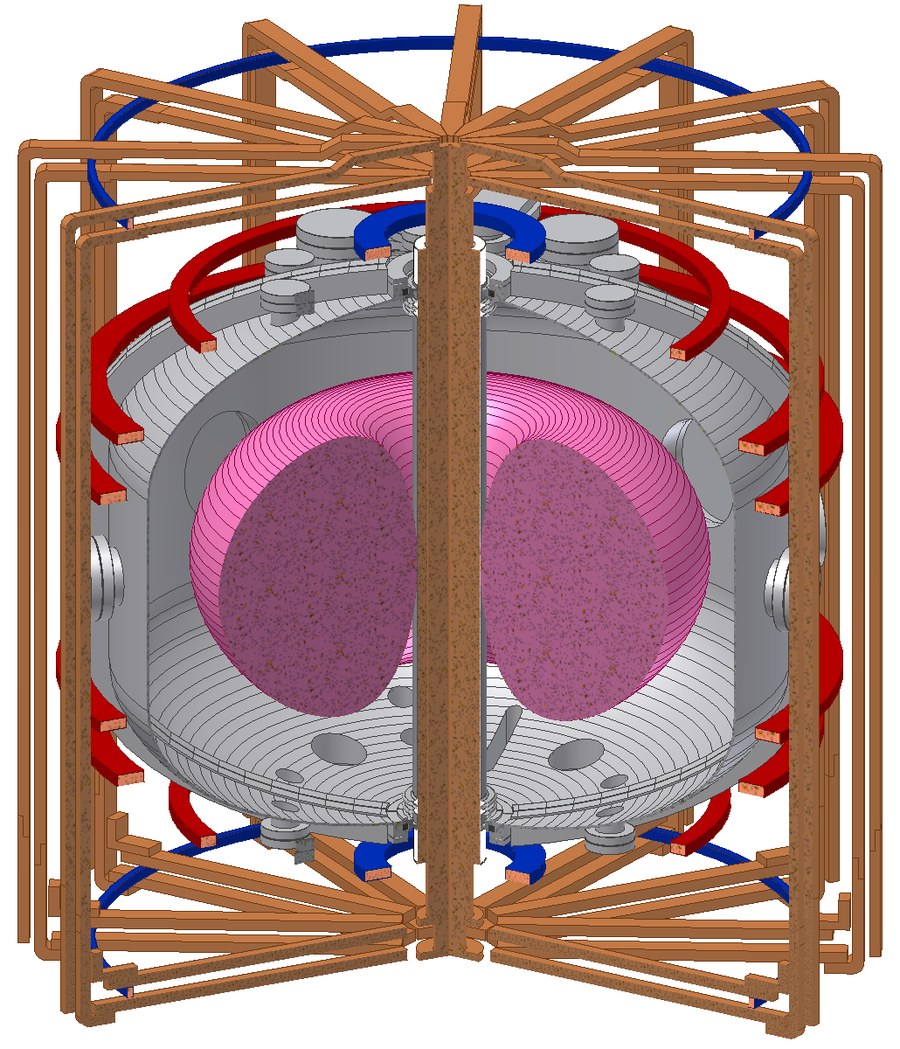
Main parameters
SUNIST is a small, low-aspect-ratio device. Its design values and best achieved values are summarised below.
| Parameter | Value | Notes |
|---|---|---|
| Major radius, R0 | 0.30 m | — |
| Minor radius, a | 0.23 m | — |
| Aspect ratio, A | ≈ 1.3 | — |
| Elongation, κ | 1.6 – 1.8 | — |
| Toroidal field on axis, BT | ≤ 0.27 T | Design value 0.15 T; upgraded toroidal-field supply |
| Plasma current, IP | ≤ 120 kA | Design value 50 kA; reached in 2019 |
| Ohmic flux | 60 mV·s | Saved by the split-vessel design |
| Electron density | ~1019 m-3 | Typical Ohmic plasmas |
| First plasma | 4 November 2002 | 40 kA / 2 ms in the first discharge |
| Major upgrade | 2008 | Vacuum, power supplies and control room upgrades over the years |
Inside the device
Vacuum vessel
The vessel is made of 316L stainless steel and is split by a three-dimensional Viton seal in order to save Ohmic flux. The split was challenged at the design stage, but the achieved base pressure is around 2×10⁻⁵ Pa; a small initial leak disappeared after the 2008 upgrade.
Magnets and coils
The coil set comprises toroidal-field coils, an ohmic-heating solenoid and poloidal/vertical-field coils. Two coil-lead failures caused by long-term vibration occurred in December 2017 and September 2019; both were repaired within days.
Power supplies
All field power supplies have been upgraded at least once: double-swing Ohmic-field supply at ±10 kA, toroidal field raised from 10 kA to 20 kA, and current feedback on the vertical-field supply. Together these increased plasma current by 2.2×, toroidal field by 1.8× and pulse length by 2× relative to the original design.
Fuelling
A high-field-side supersonic molecular beam injection (SMBI) system uses a small vacuum-proof valve with a Laval nozzle: 1 ms turn-on, repeat interval under 3 ms, injection speed about 1500 m/s. Discharge repeatability is improved by starting from a uniform pressure profile, about 80 ms after gas puffing.
Wall conditioning
Molybdenum limiters are used together with baking below 373 K and glow discharge in hydrogen and helium. Siliconisation was tested several times before 2008. Wall conditions are systematically better at night.
Control and data acquisition
The device and its diagnostics are operated through the laboratory's control, data acquisition and communication (CODAC) system, which records the discharge database of about 100,000 shots accumulated over two decades.
Seeing the plasma
Diagnostics on SUNIST cover the full electromagnetic spectrum, from magnetic probes to hard X-rays, supported by fast data acquisition.
- Magnetic probes — arrays outside and inside the vessel, including a thin high-frequency array and an internal radial array for mode structure.
- Interferometry — a five-channel 105 GHz microwave interferometer with 0.5 µs response and 1×10¹⁵ m-2 resolution.
- Probes — Langmuir probe arrays; a reciprocating magnetic thrust probe up to 20 m/s; a projectile probe.
- Radiation — bolometers, soft X-ray diode arrays, hard X-rays, electron-beam emission and a fast camera with Doppler broadening.
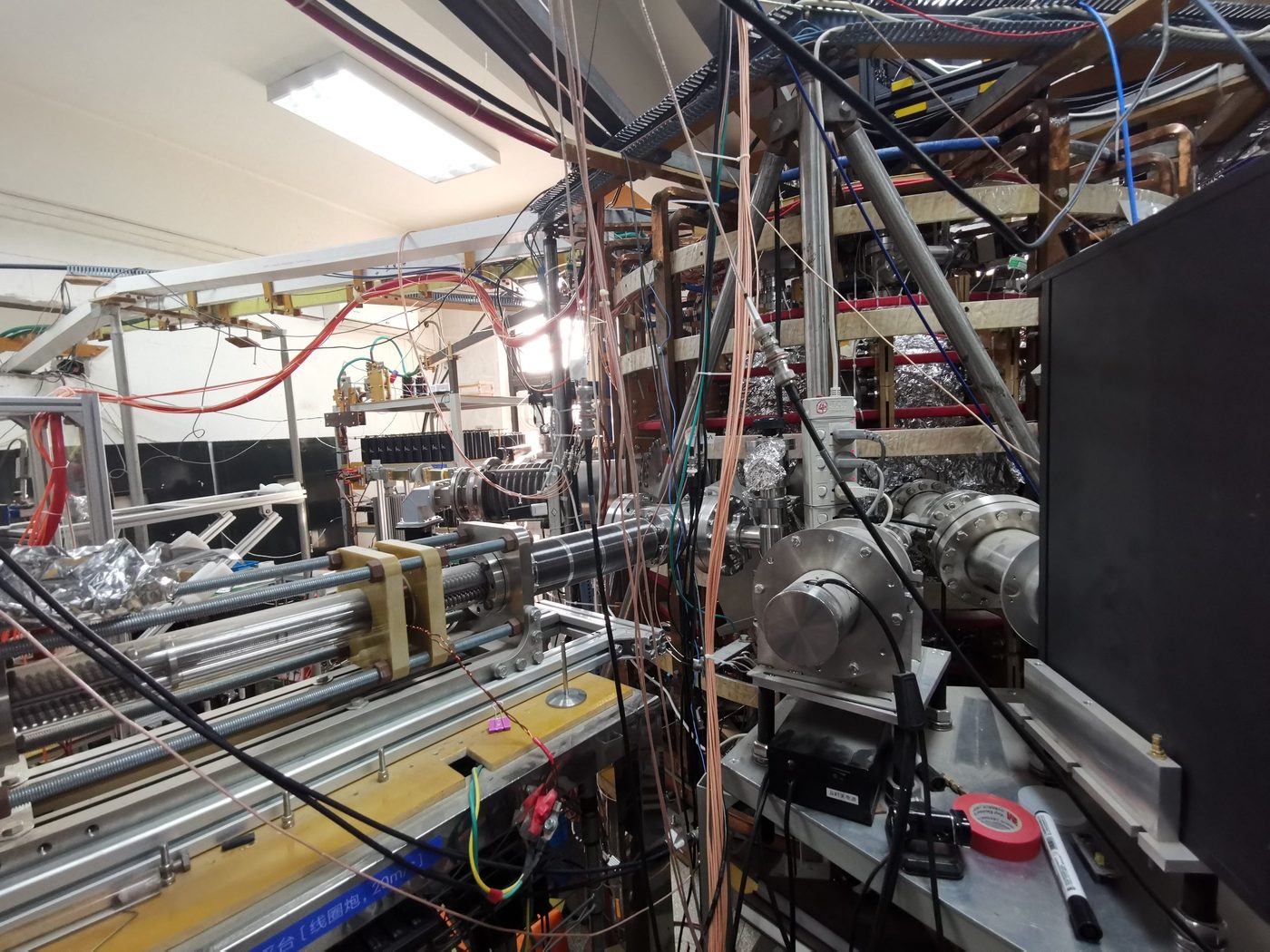
The device in the laboratory
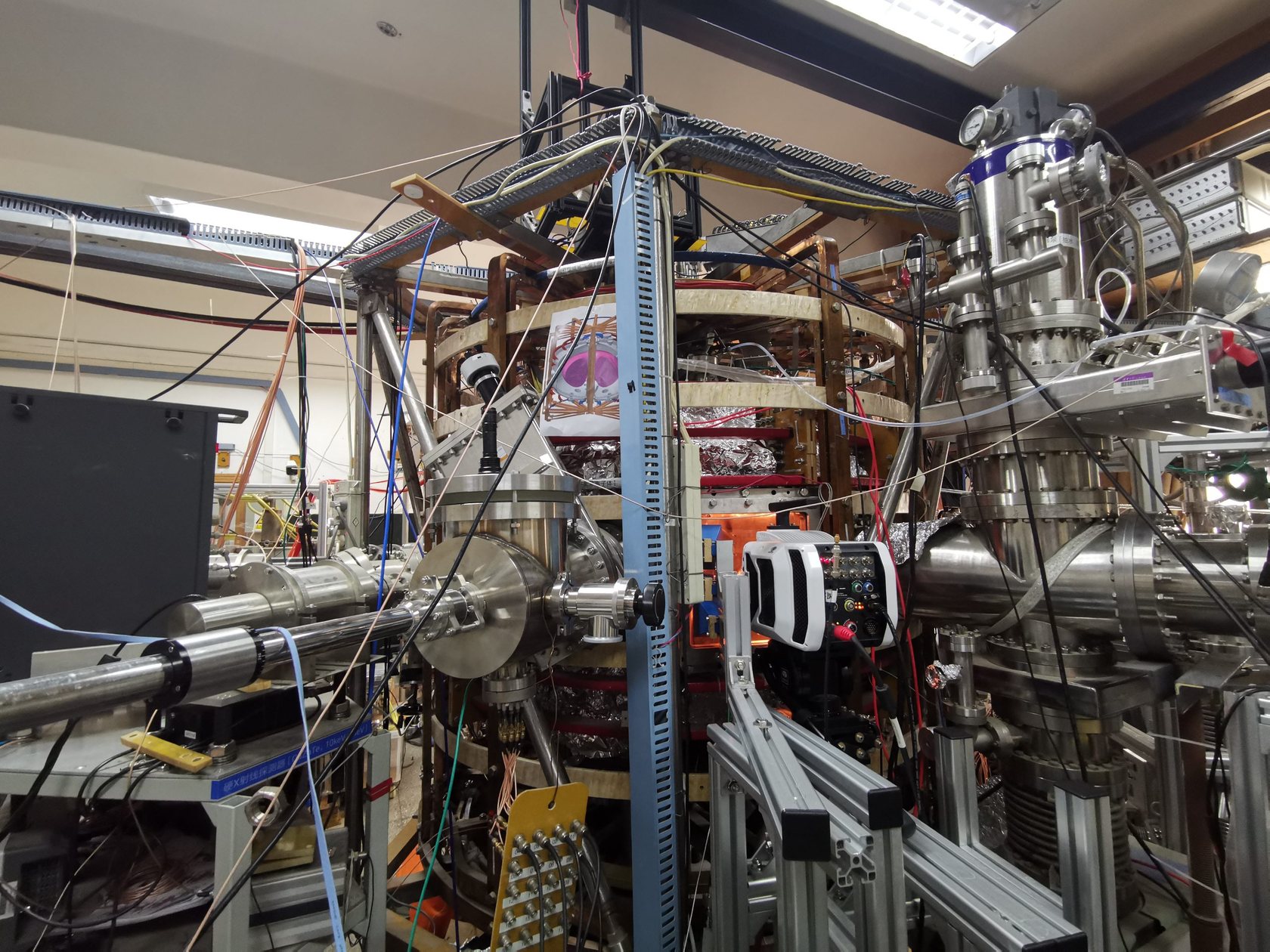
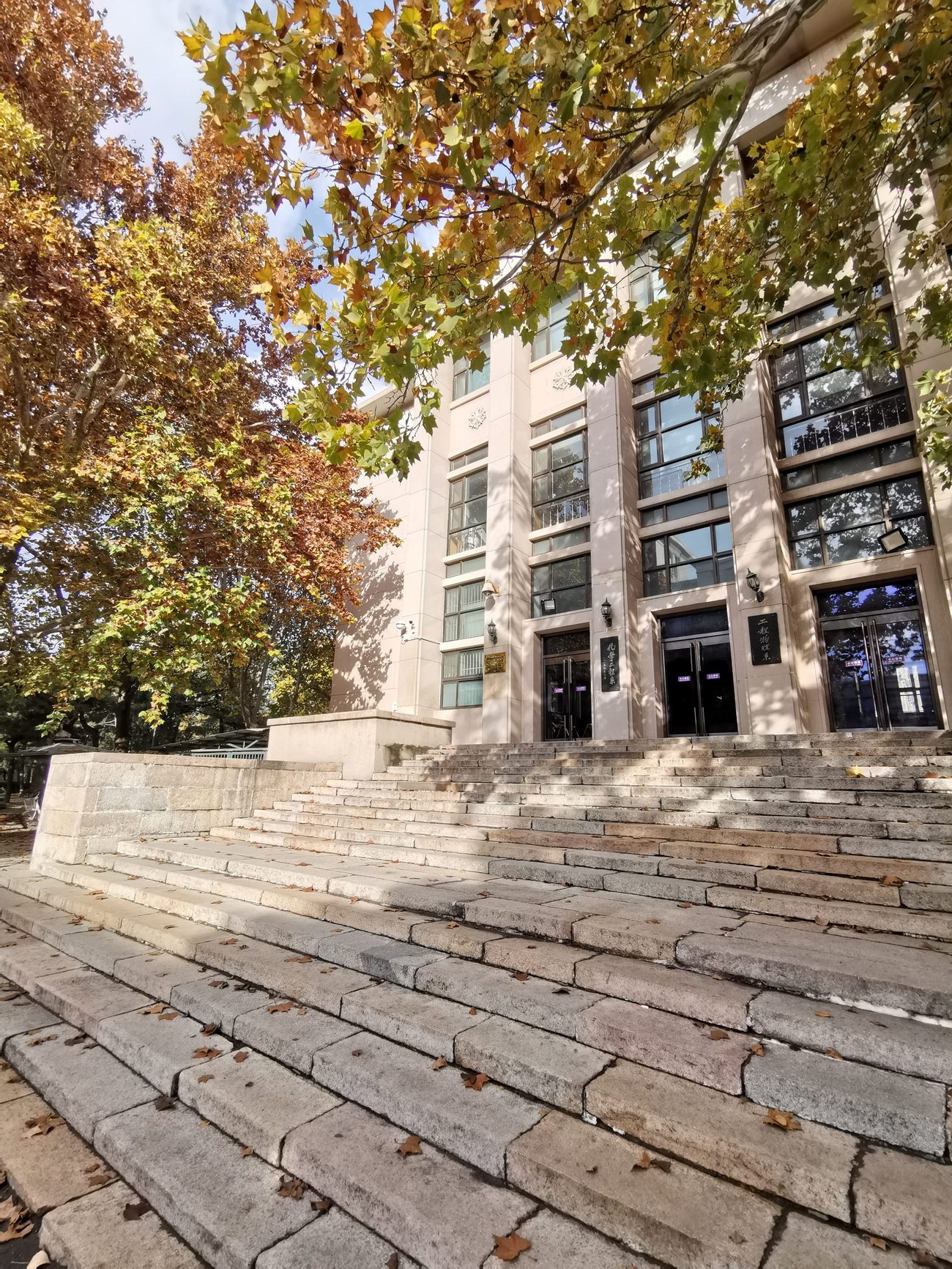
Further photographs and results are available on request: tanyi@sunist.org.
Research on SUNIST
From three-dimensional eddy currents to turbulence, diagnostics and fuelling — read about the science done on the device.