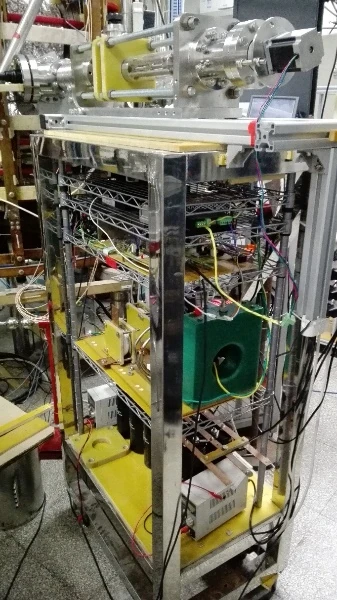
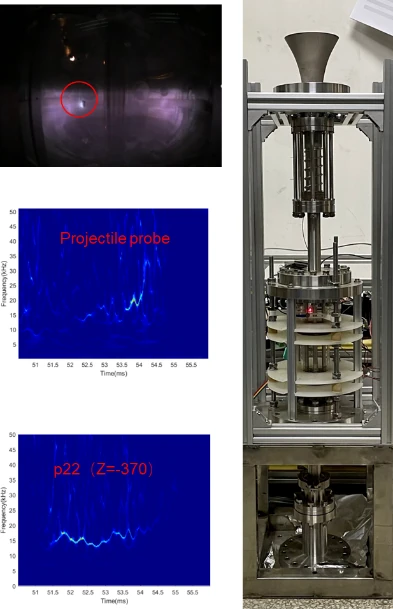
Magnetically driven reciprocating probes were widely used in SUNIST. The left figure shows a radial system utilizing pulsed coils to accelerate probes up to [16], scanning the full SUNIST plasma radius within . Meanwhile, the vertical launcher in the right figure employed a similar electromagnetic technique to loft a fully self-contained measurement sphere (with magnetic probes, ADC, buffer, MCU and wireless communications inside) to the central midplane. With no long supporting stalk, plasma perturbation was minimized for the free-floating probe (Fig. 17).
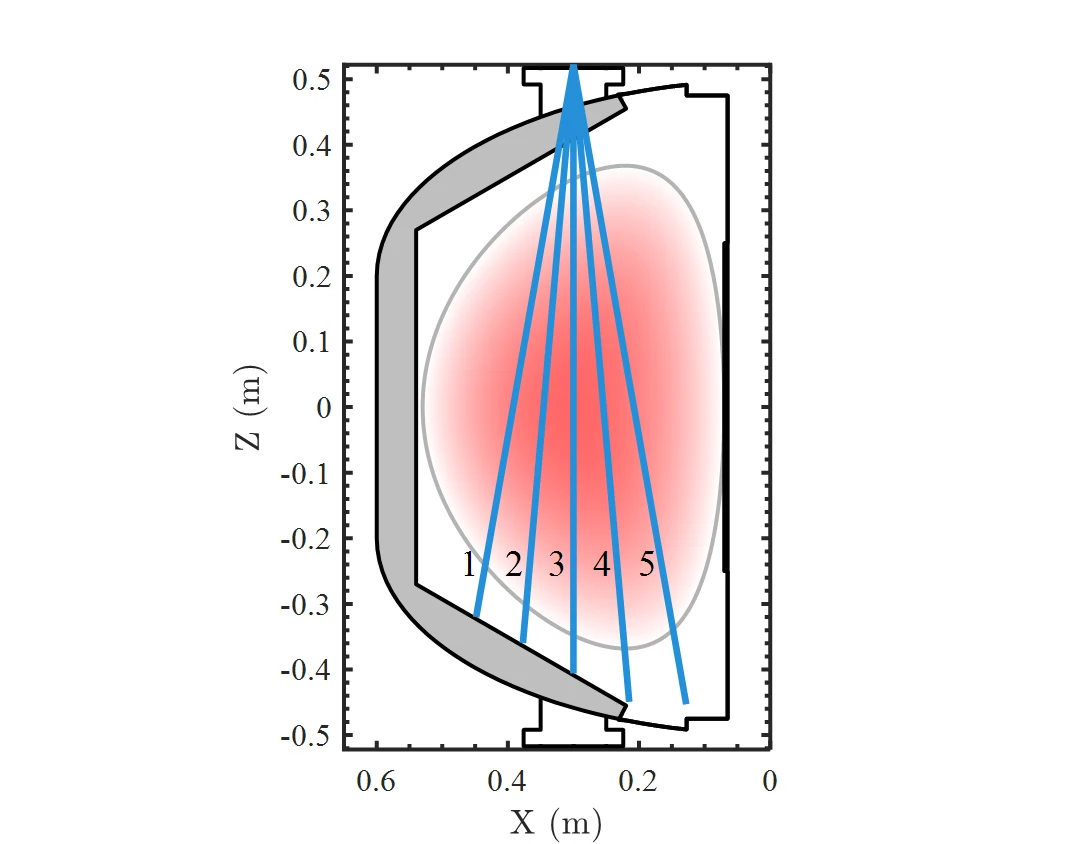
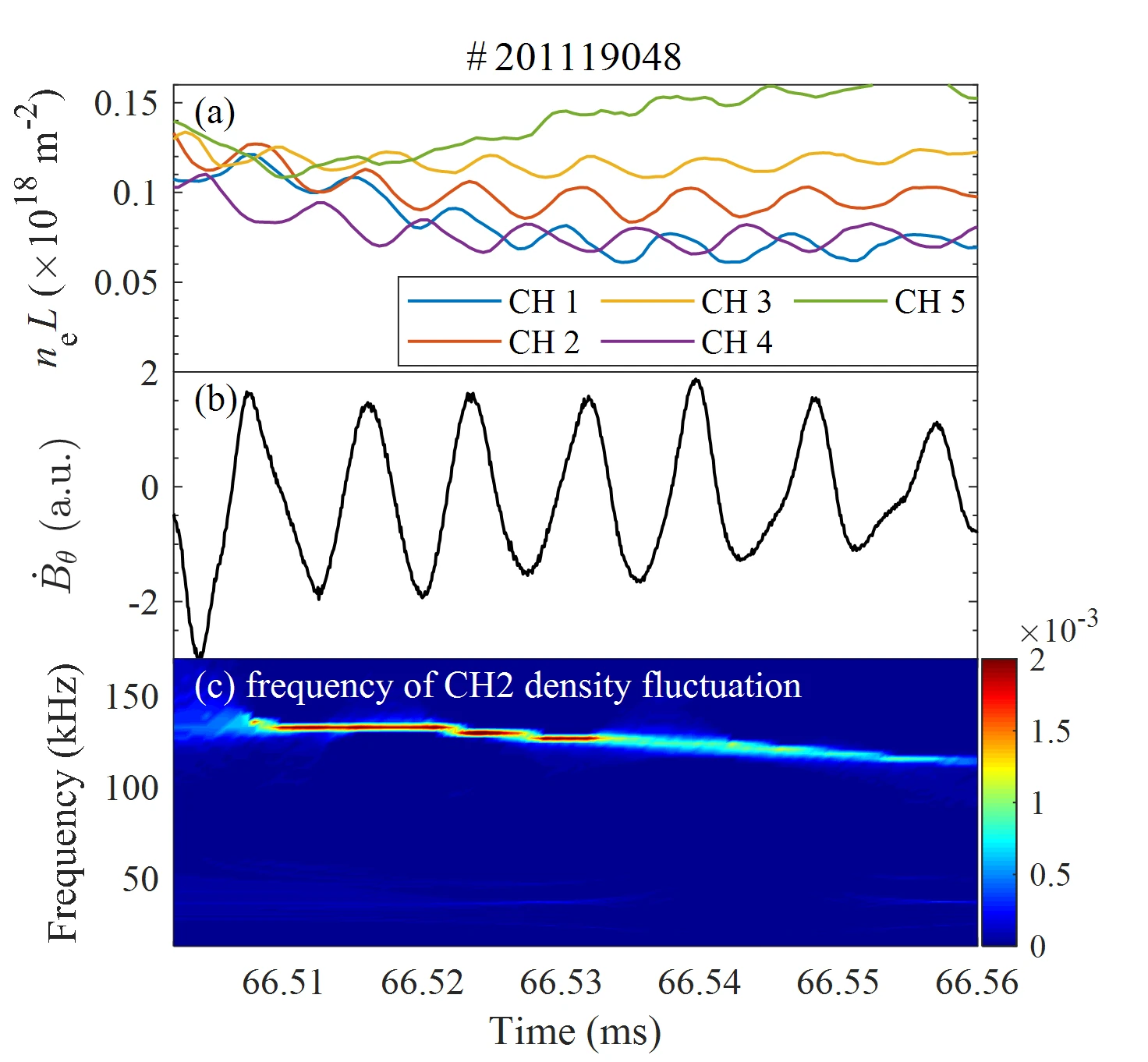
A 5-channel interferometer[17] was constructed, achieving a bandwidth up to and density resolution of . As shown, excellent agreement was obtained between density fluctuations measured by interferometry and magnetic signals, capturing events up to 100 kHz. This may be the first evidence of density fluctuation caused by Alfvénic perturbations (Fig. 18).