
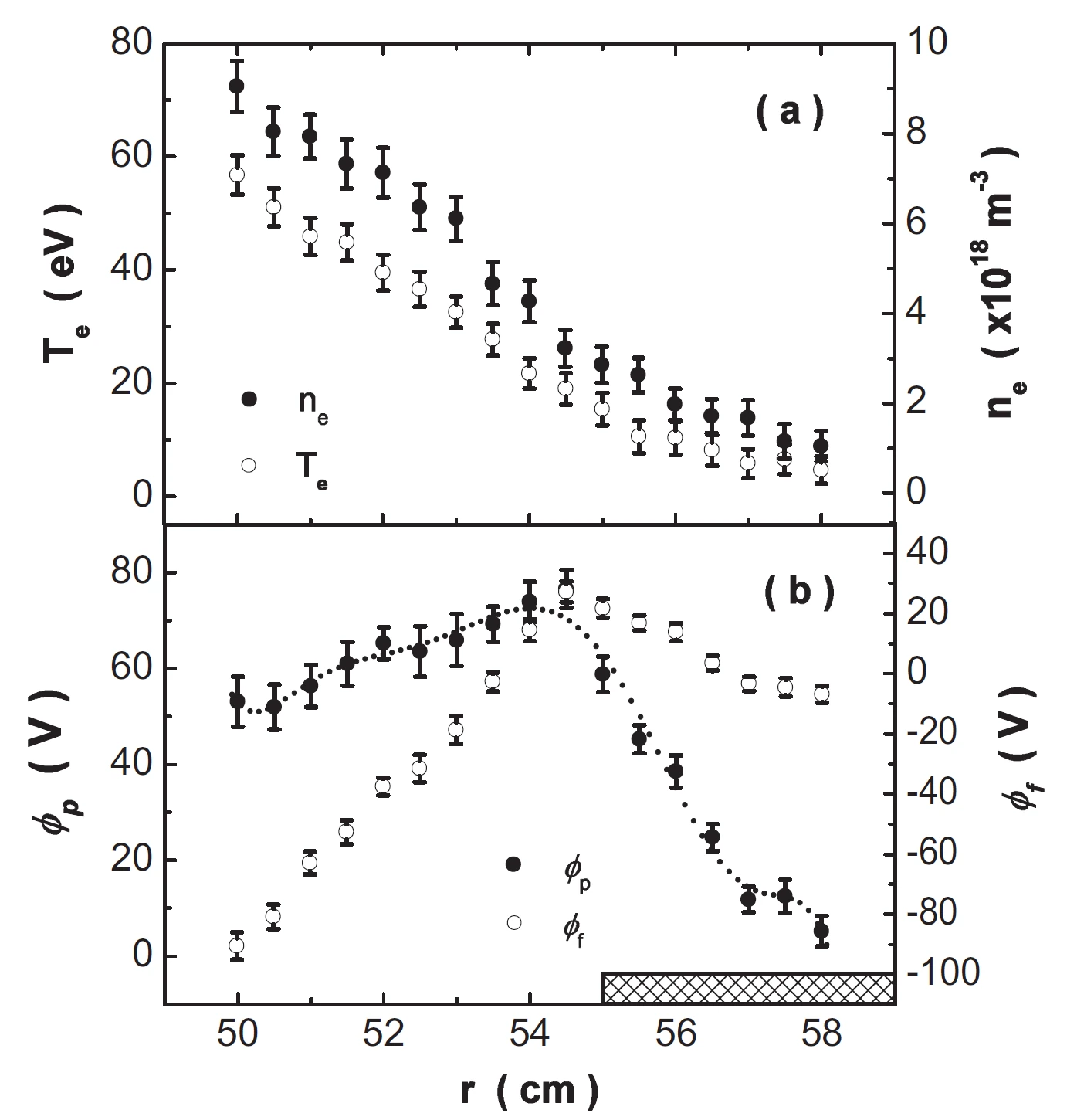
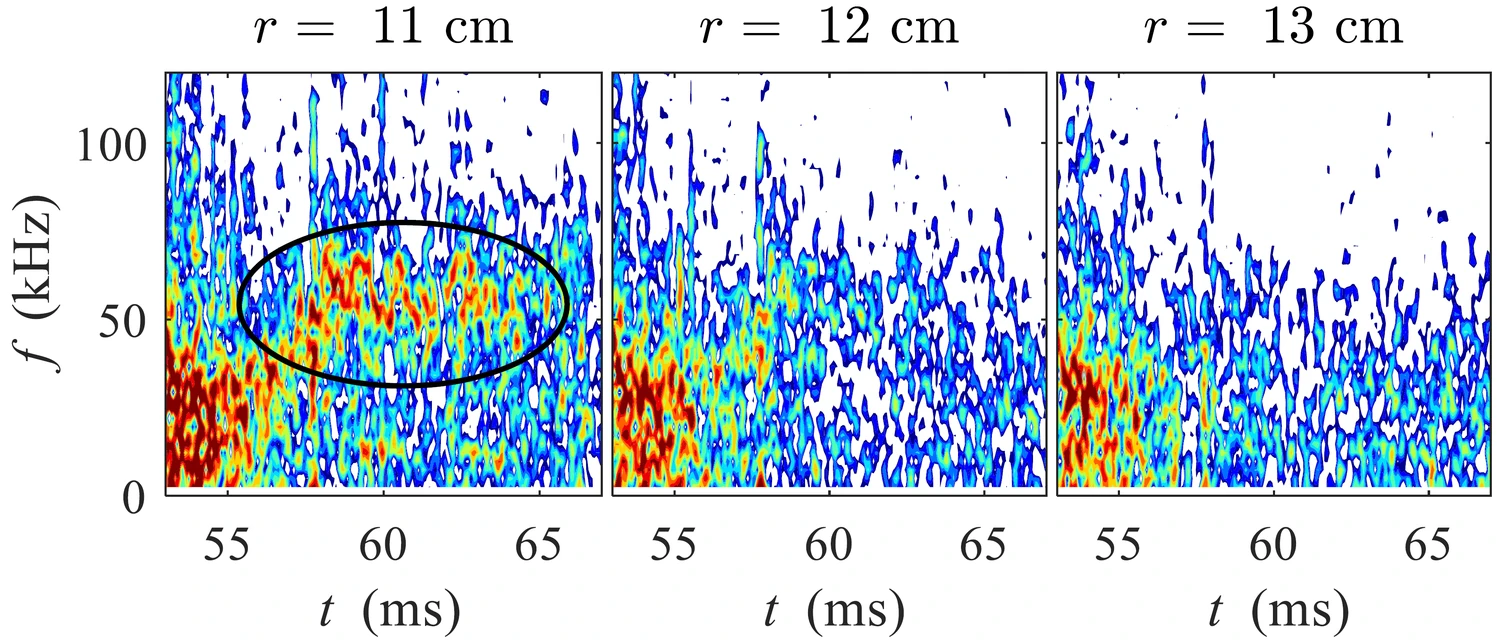
In addition to specialized ST research, SUNIST has enabled fundamental plasma physics studies. Using diverse electrostatic and magnetic probe arrays, comprehensive measurements of edge plasma parameters were obtained, including temperature, density, and potential profiles[11]. It was found that edge plasma characteristics of ST were quite similar to the edge of conventional tokamaks. Quasi-coherent fluctuations[12], an interesting electrostatic mode near the core of plasma, were also characterized using an internal Langmuir probe array (Fig. 15).
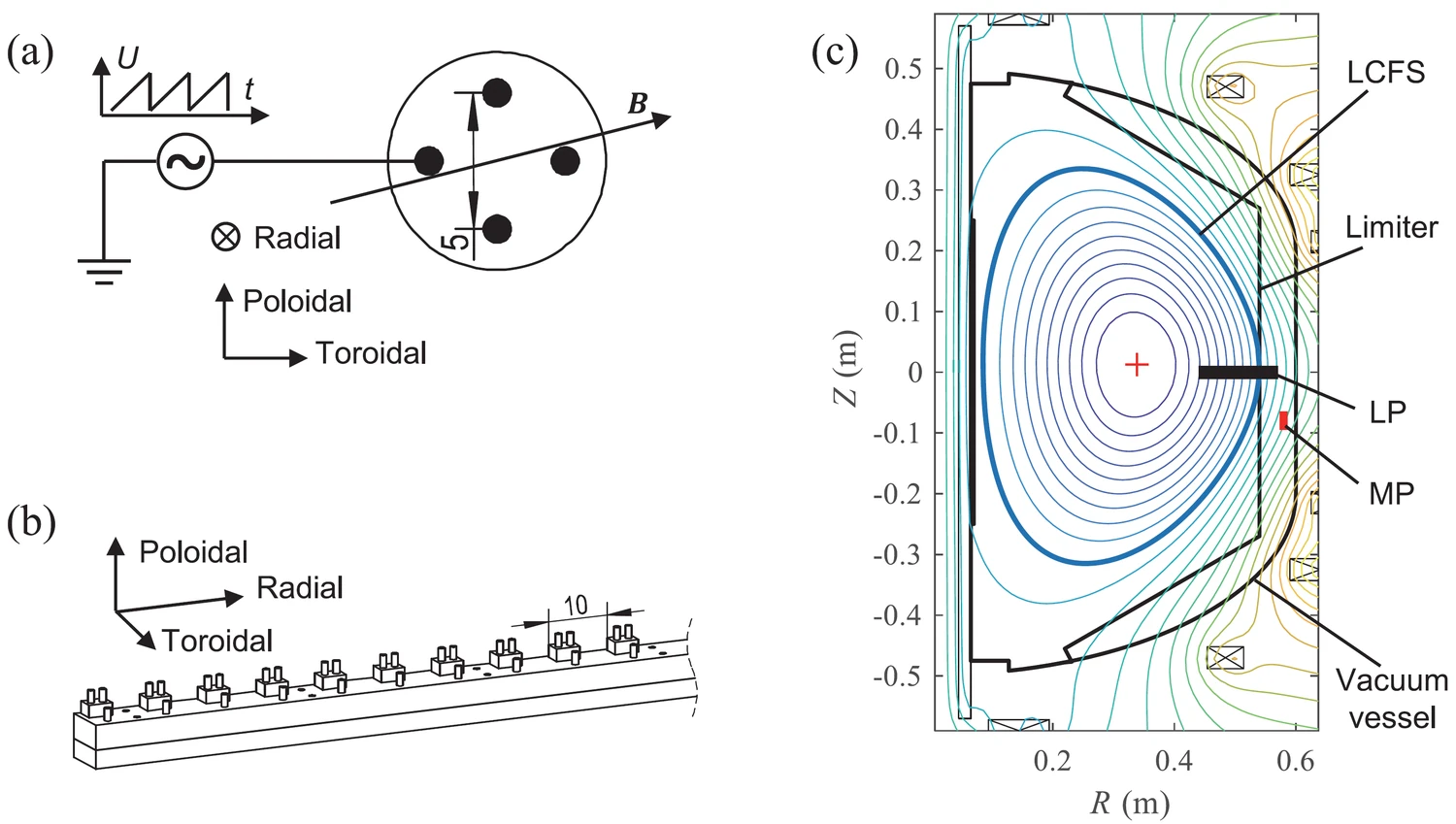
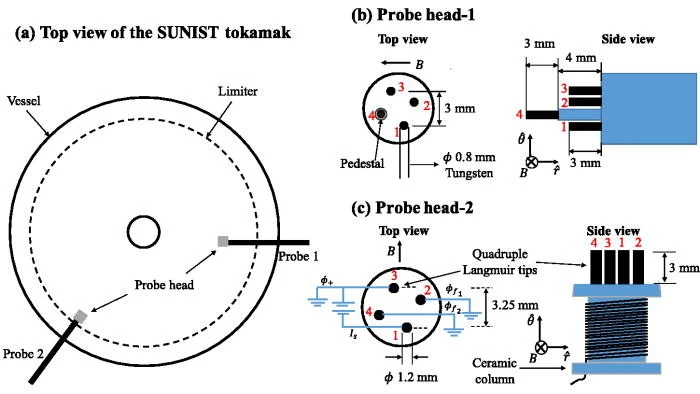
Moreover, composite probes combining magnetic and electric probes (Fig. 16) were implemented, enabling coincident measurements of magnetic and electrostatic turbulence at the same locations. Detailed analysis of various transient events elucidated the energy transfer mechanisms between magnetic and electrostatic fluctuations[12][14][15].
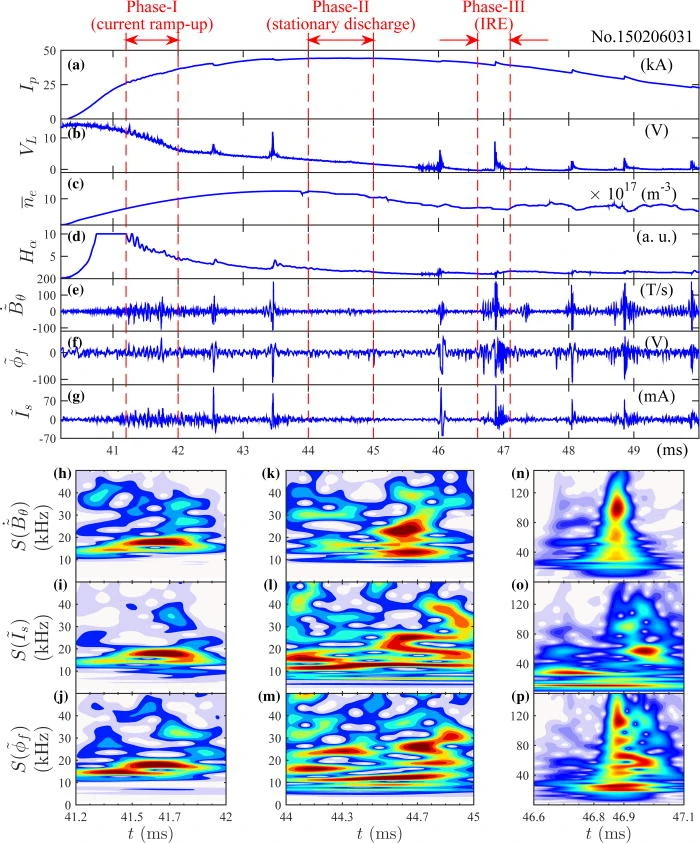
This broad plasma physics research program, complementing the main ST agenda, highlights SUNIST's capabilities as a general flexible tokamak experiment. The high-quality edge plasma measurements in particular provide critical boundary conditions for interpreting core phenomena and modeling. The fundamental transport studies also contribute to the advancement of tokamak science at large.