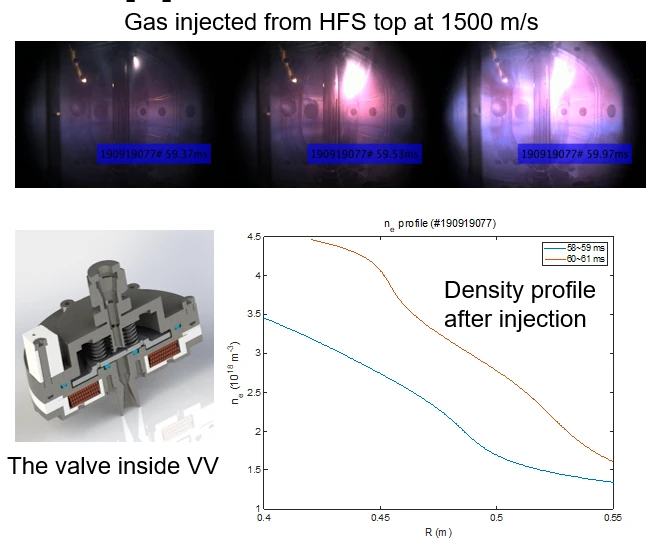
SUNIST had been extensively upgraded and substantially enhanced plasma performance. All the magnetic field power supplies have been refurbished and upgraded more than once[4][5]. Fig. 7 compares the initial and present supply configurations. Originally consisting of simple capacitor banks and thyristor switches in free discharge circuits lacking feedback control, all systems have now been converted to fully controlled IGBT circuits with advanced feedback capabilities.
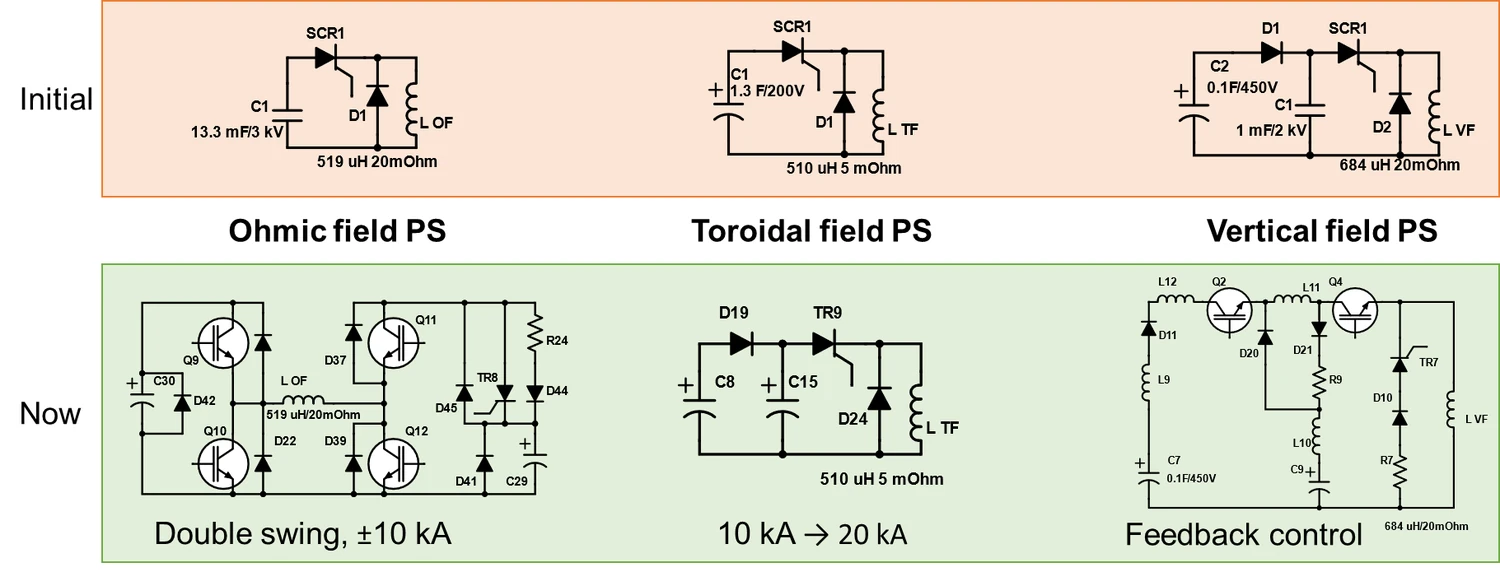
These renovations led to dramatic improvements in achievable plasma parameters. From the first plasma with IP below 40 kA and pulse length about 2 ms in 2002, recent operations routinely reach 120 kA IP with over 20 ms flat-top duration. The toroidal field has also been boosted to 0.27 T from 0.15 T (Fig. 8).
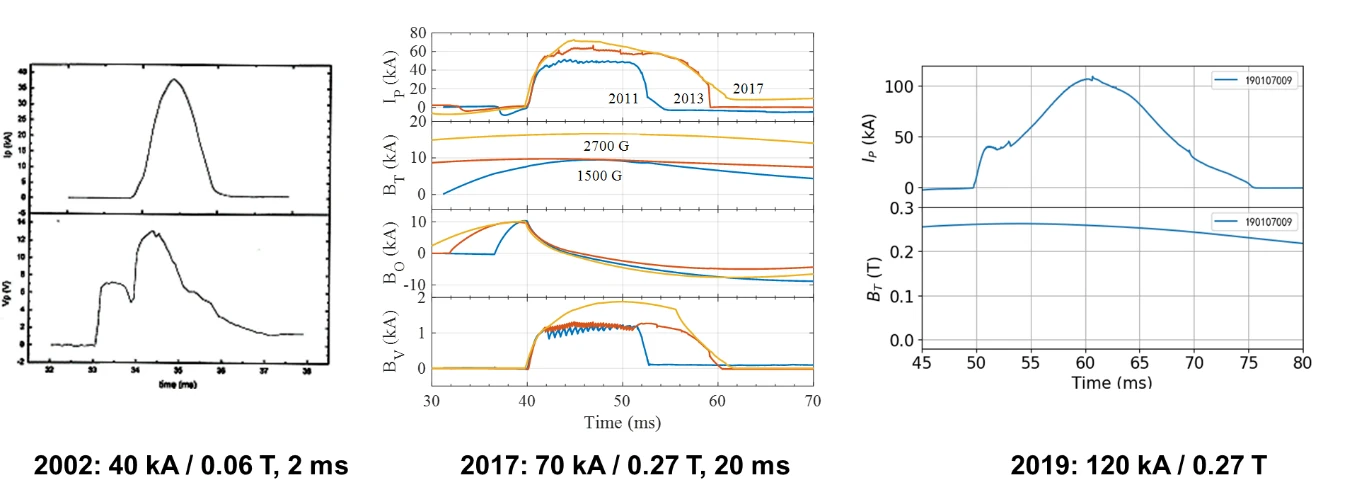
Unfortunately, damage events occurred during long-term operation. Fatigue fracturing of the copper busbars at the top and bottom joints of the compensation coils occurred in 2017 and 2019 due to sustained vibration stresses. However, both breaks were quickly repaired within a week or even a day. The coils remain functional after restoration work, as shown in Fig. 9.
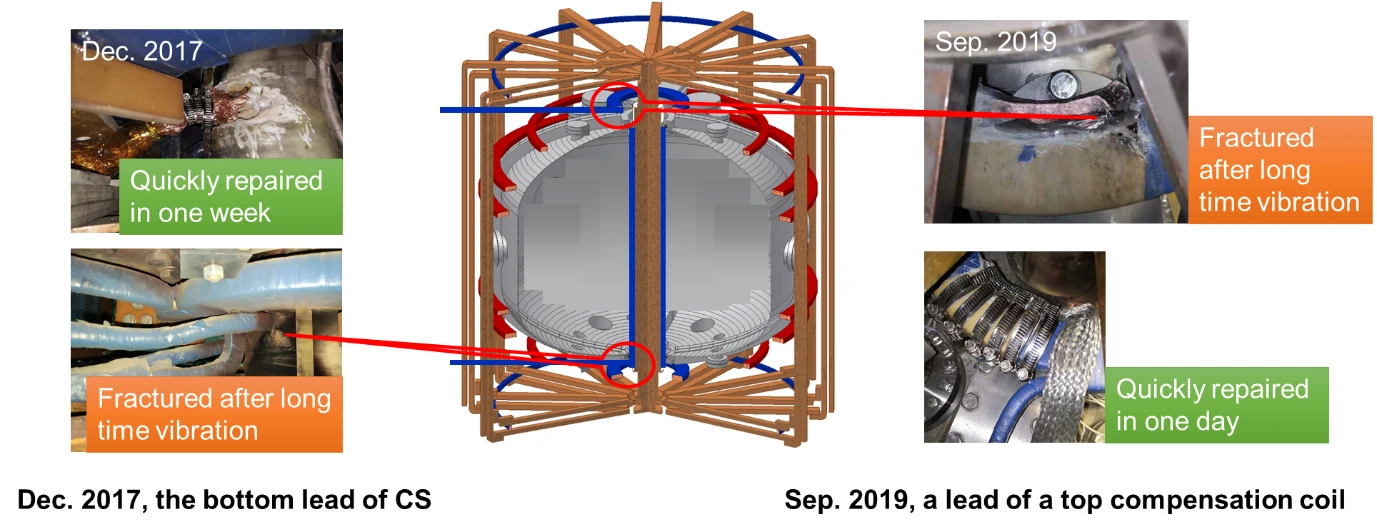
To further enhance plasma fueling, an ultra-fast gas puffing method using in-vessel supersonic molecular beam injection (SMBI) was developed. With compact size and vacuum-compatible materials, this valve was installed inside the vessel for direct core fueling. Fig. 10 shows the SMBI design. The photos visualize its blisteringly high flow velocity up to , measurable by visible light emission. Gas traverse time from the high-field side to plasma center is under . The valve operation is rapid, opening within and repeating at intervals below . This represents exceptional performance for core fueling applications.